
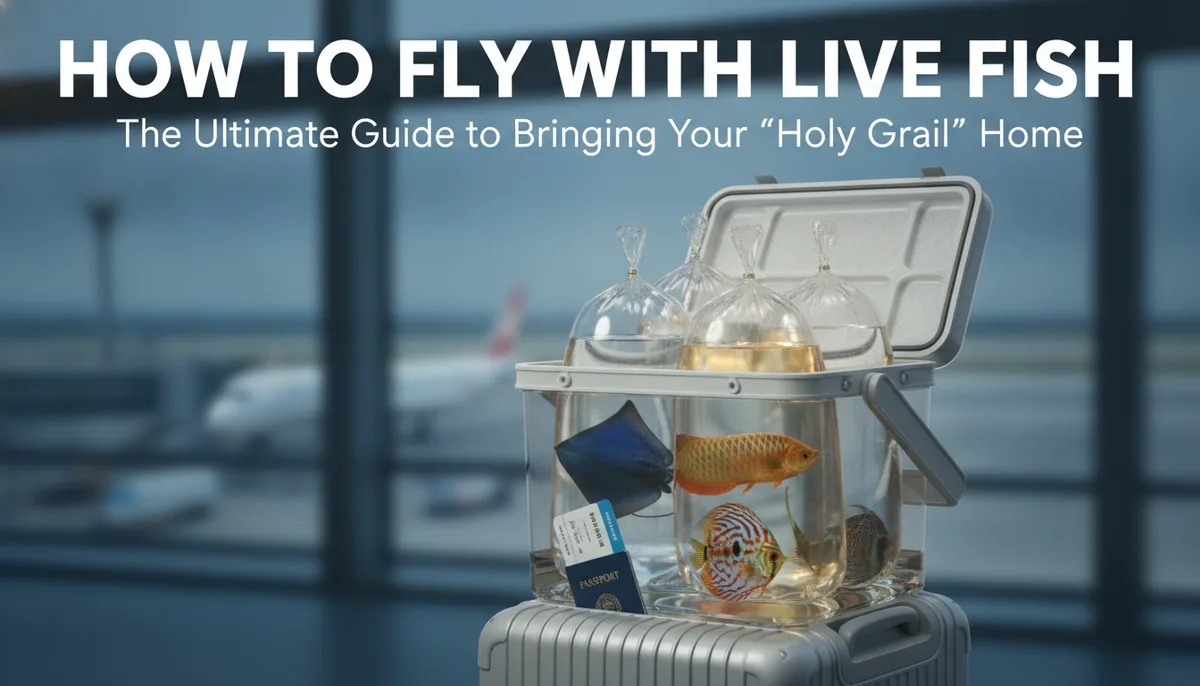
How to Fly with Live Fish: The Ultimate Guide to Bringing Your "Holy Grail" Home
Finding a "holy grail" fish is a rite of passage for many aquarium enthusiasts. You are hundreds of miles from home, perhaps on a business trip or a family vacation, and you decide to duck into a local fish store. There, in a corner tank, is the exact specimen you’ve been hunting for years—a fish you’ve only seen in grainy YouTube videos or high-end magazines.
The excitement is immediately followed by a wave of anxiety: How on earth do I get this fish home on a plane?
Flying with live fish is entirely possible within the continental United States, but it requires more than just a wing and a prayer. It demands meticulous planning, an understanding of federal regulations, and a "backwards planning" approach to logistics. This guide provides a comprehensive, step-by-step roadmap to successfully transporting your new aquatic prize from the store to your home aquarium.
The Foundation: Preparing Your Destination Tank
Before you even consider purchasing a fish while traveling, you must have a plan for its arrival. The stress of air travel—vibrations, pressure changes, and temperature fluctuations—leaves fish in a vulnerable state. The last thing you want to do after a long day of travel is spend three hours setting up a tank and waiting for the water to dechlorinate.
The Necessity of a Quarantine Tank
It is highly recommended that you have an established quarantine tank (QT) ready and running before you leave for your trip. A QT serves two purposes: it allows the fish to recover in a low-stress environment without competition from tank mates, and it protects your existing livestock from any potential diseases the new fish might be carrying.
When setting up your QT, focus on stability. If you are looking to set up a sleek, dedicated space for new arrivals, you might consider one of the Best Rimless Aquariums for a Modern Home Aesthetic to keep as a permanent hospital or quarantine setup.
To ensure the environment is safe, the tank must be fully cycled. Use a reliable heater to maintain a steady temperature, as fluctuations can trigger outbreaks of Ich or velvet in stressed fish. The Eheim Jager Heater is a classic choice for this, known for its precision and durability in maintaining the specific parameters a recovering fish needs.
Travel Day Logistics: The Power of Backwards Planning
Success in flying with fish is won or lost in the schedule. Professional transporters use a technique called "backwards planning." This involves starting with your flight’s departure time and working backward to determine exactly when every action—from purchasing the fish to arriving at the terminal—must occur.
Building Your Timeline
When building your timeline, consider the following variables:
- Flight Departure: This is your "Zero Hour."
- TSA Buffer: You need at least 30–45 minutes extra for the manual inspection of the fish.
- Rental Car Return: If you have a rental, factor in the time to drop it off and shuttle to the terminal.
- Transit and Traffic: Will you be driving to the airport during rush hour?
- The Fish Store Visit: This should be your final stop before the airport.
The goal is to minimize the total time the fish spends in the bag. Every minute the fish is in that confined space, oxygen is being depleted and CO2 is building up, which causes the pH of the water to drop. By making the fish store your last stop, you ensure the highest possible water quality for the duration of the flight.
digital aquarium thermometer for travel
At the Fish Store: Professional Selection and Packing
When you find the fish you want, communication with the store staff is vital. Don't just point and buy; explain that you are flying. Most local fish store (LFS) employees are hobbyists themselves and will take extra care if they know the fish is headed for a plane.
Inspection and Health Check
Inspect the fish with extreme scrutiny. Look for:
- Clear eyes and intact fins.
- Active swimming patterns (avoid fish hovering listlessly or gasping at the surface).
- No signs of white spots (Ich) or velvet.
- A healthy "pinch" or girth (avoid emaciated fish).
If the fish is already showing signs of stress, the flight may be fatal. Only purchase fish that appear 100% fit for the journey.
The Packing Protocol
The way the fish is bagged determines its survival rate. Ask the employee for the following:
- Double Bagging: This is non-negotiable. If one bag leaks, the second provides a fail-safe. Ensure both bags are oriented with the openings at the top. Some stores flip the inner bag upside down to eliminate corners where small fish can get stuck, but for TSA purposes, having both openings at the top is easier if they need to inspect the water.
- Oxygen Injection: If the store has a pure oxygen tank, ask them to "top off" the bag with oxygen rather than just room air.
- Minimal Water, Maximum Air: A common mistake is filling the bag with too much water. The fish only needs enough water to remain fully submerged when the bag is tilted. The rest of the bag should be air (or oxygen), as the gas exchange happens at the surface.
- Extra Supplies: Ask for a few spare bags and rubber bands. If you notice a leak while waiting at the gate, you’ll be glad you have them.
heavy duty aquarium fish shipping bags
Navigating TSA: Understanding the Rules
The most common fear among hobbyists is that TSA will confiscate the fish because of the liquid restrictions (the 3-1-1 rule). However, live fish are a specific exception to this rule.
The TSA Live Fish Policy
According to TSA guidelines, live fish in water are permitted through security checkpoints. The fish must be in a "clear, transparent container." While a standard fish bag is transparent, it is often helpful to place the bagged fish inside a clear plastic tub or a small, clear cooler to keep it upright and protected.
The Inspection Process
When you reach the front of the security line, inform the TSA officer immediately that you are carrying live fish.
- Do Not Send Fish Through the X-Ray: While some argue the radiation is minimal, it is best to request a manual inspection.
- Water Testing: TSA may need to test the water. They often do this by swabbing the outside of the bag or, occasionally, by asking you to open the outer bag so they can test the vapors or a small sample of the water for explosives. This is why having extra bags and rubber bands is crucial.
- Be Patient and Polite: Many TSA officers have never seen someone fly with a fish. Being calm and having the TSA website's "Live Fish" page pulled up on your phone can help smooth over any confusion.
On the Plane: Temperature and Pressure Management
Once you are through security and on the aircraft, your primary job is temperature control. The cabin of an airplane is usually kept around 70-75°F, but the floor can be much colder.
Carry-On Strategy
Never check a fish in your luggage. The cargo hold is not climate-controlled in the same way the cabin is, and the pressure changes are more drastic. Your fish should be your "personal item" or inside your carry-on bag.
To maintain temperature:
- Insulation: Use a small, soft-sided cooler or wrap the bags in a thick layer of bubble wrap or a fleece jacket.
- Placement: Keep the fish under the seat in front of you. Do not place the bag directly on the floor, as the vibration and cold can be stressful. Placing the bag on top of your carry-on or a folded sweatshirt provides a buffer.
- Darkness: Keep the fish in the dark. Darkness acts as a natural sedative for fish, lowering their metabolic rate and reducing oxygen consumption.
While you are traveling, you might be worried about the fish you left behind at home. If you travel frequently, using Automatic Fish Feeders: Keeping Your Pets Fed While Traveling can ensure your main display remains stable while you are off hunting for new additions.
Seachem Prime water conditioner
Arrival and Acclimation: The Final Stretch
The moment you walk through your front door, the clock is ticking. The water in the bag is likely high in ammonia, but because the pH has dropped during the flight, that ammonia is in a less toxic form (ammonium).
The Danger of "Plop and Drop" vs. Drip Acclimation
As soon as you open the bag and fresh air enters, the pH will begin to rise rapidly. This shift converts the non-toxic ammonium back into highly toxic ammonia.
- For short trips: If the fish has only been in the bag for a few hours, a standard drip acclimation is fine.
- For long trips: Many experts recommend a "plop and drop" method for fish that have been bagged for a long time. This involves netting the fish out of the bag and placing it directly into the quarantine tank to get it out of the ammonia-laden water immediately. However, this only works if the temperature and pH of your QT tank closely match the source water from the fish store.
Post-Travel Monitoring
Once the fish is in the tank, keep the lights off for the first 24 hours. Do not attempt to feed the fish immediately; wait until the next day when it has settled. Observe the fish for any signs of "clamped fins" or rapid breathing, which could indicate ammonia burn or osmotic shock from the move.
Summary Checklist for Flying with Fish
To ensure nothing is forgotten, use this quick checklist for your next trip:
- [ ] Quarantine Tank: Cycled and heated to the correct temperature.
- [ ] Backwards Plan: Timeline established from flight departure to store visit.
- [ ] Supplies: Extra bags, rubber bands, and an insulated carrier.
- [ ] TSA Readiness: Knowledge of the live fish exception and a clear container for inspection.
- [ ] Acclimation Plan: Water conditioner and a net ready for the arrival.
Flying with fish may seem daunting, but for the dedicated hobbyist, it is a manageable skill that opens up a world of rare and exotic livestock. By following these protocols, you can ensure that your "holy grail" find makes it from the local fish store to your home aquarium safely and healthily.