
The Best Quiet Aquarium Filters for a Peaceful Living Room
Affiliate Disclosure: This post contains affiliate links. If you purchase through these links, The Tank Keeper may earn a small commission at no extra cost to you, helping us continue to provide supportive advice for your aquatic journey.
The best quiet aquarium filters are high-quality canister filters like the Fluval 07 Series or the Eheim Classic, which use sound-dampening technology and encased motors to minimize vibration. For those who prefer the convenience of a Hang-on-Back (HOB) filter, the Seachem Tidal Series is widely considered the quietest option due to its submerged pump design, which eliminates the common "rattle" associated with traditional HOB units.
Choosing a filter that performs its job without sounding like a construction site is essential for homeowners who view their aquarium as a source of relaxation rather than a source of stress.
Why Noise Levels Matter for the Home Hobbyist
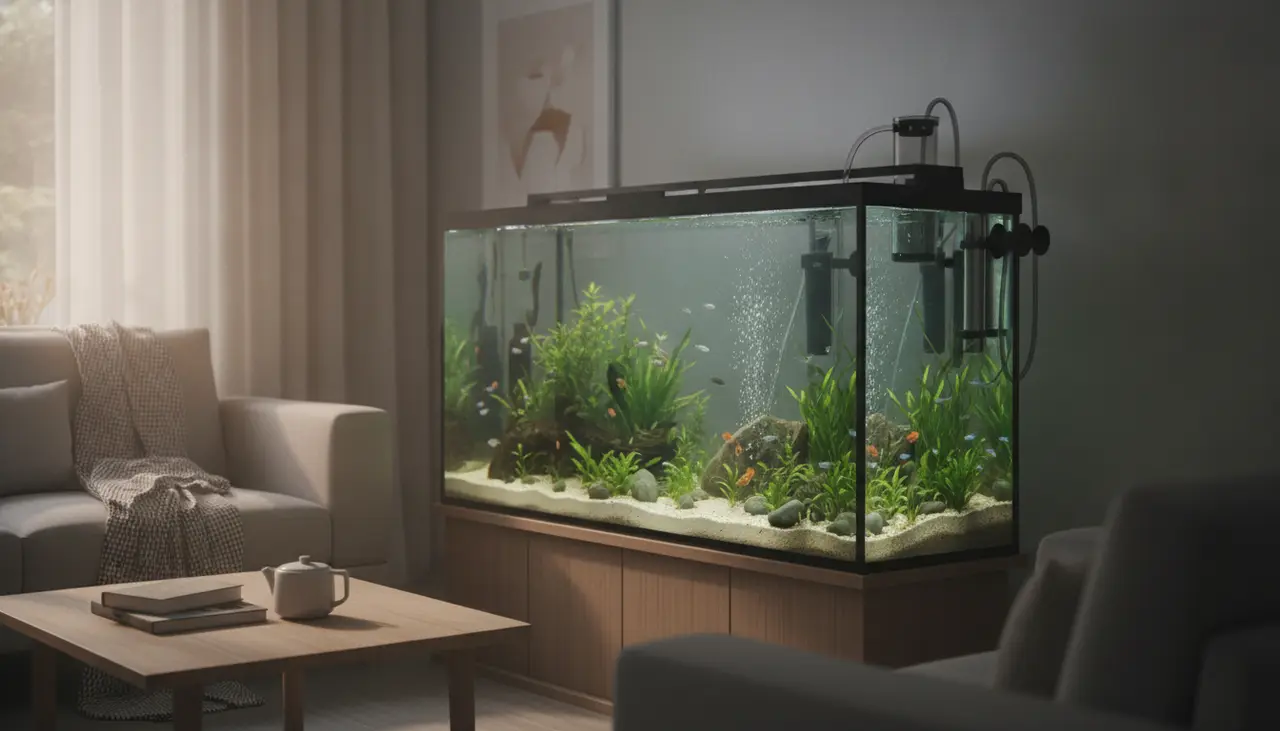
We’ve all been there: you’ve finally finished a long day of work, the house is quiet, and you sit down with a cup of tea to watch your fish. Instead of the gentle, meditative trickle of water, you hear a persistent grinding or a low-frequency hum vibrating through your living room floor.
Maintaining an aquarium is a form of "aquatic parenting." You want the best for your fish—crystal clear water and a healthy Nitrogen Cycle—but you also need your home to remain a sanctuary. Finding a filter that balances technical efficiency with acoustic comfort is one of the best investments you can make for your peace of mind.
This guide is designed for the hobbyist who needs a reliable, "set-it-and-forget-it" filtration strategy that respects the quiet atmosphere of a modern home.
Comparison of the Top Quiet Aquarium Filters
| Filter Model | Type | Best For | Noise Level | Key Silent Feature |
|---|---|---|---|---|
| Fluval 07 Series | Canister | Large Living Room Tanks | Ultra-Quiet | Precision-engineered stabilizers |
| Eheim Classic | Canister | Long-term Reliability | Very Quiet | Silicon sealing rings & heavy casing |
| Seachem Tidal | HOB | Easy Maintenance | Quiet | Submerged pump (no priming noise) |
| Fluval C-Series | Power Filter | Multi-Stage Cleaning | Moderate | Re-engineered impeller cover |
Deep Dive: The Best Silent Filter Options
1. The Gold Standard for Silence: Fluval 07 Series (Canister)
The Fluval 07 series (specifically the 107, 207, 307, and 407) was designed with acoustics in mind. Fluval re-engineered the motor to be up to 25% quieter than previous generations. It uses a high-precision impeller and sound-dampening rubber feet stabilizers that prevent vibrations from traveling into your aquarium cabinet.
- Pros: Exceptional build quality; high surface area for Beneficial Bacteria; very easy to prime.
- Tradeoffs: Canister filters require a bit more "under-the-cabinet" space and a slightly longer setup time than HOB filters.
2. The Reliable Workhorse: Eheim Classic (Canister)
There is a reason the Eheim Classic has been a staple in the hobby for decades. Its simple, cylindrical design and heavy-duty motor head dampen sound naturally. Because the motor is encased in a thick, high-quality plastic housing, the mechanical hum is significantly reduced.
- Pros: Extremely durable; few moving parts to break; consistent flow.
- Tradeoffs: Does not include "click-fit" valves in all basic kits, which can make maintenance slightly more involved for a busy owner.
3. The Quietest HOB: Seachem Tidal Series
If you don't have the space for a canister filter, the Seachem Tidal is the answer. Most HOB filters are loud because the pump is located outside the water, creating vibration against the glass. The Tidal places the pump inside the tank water, which naturally muffles the sound and ensures the filter is self-priming.
- Pros: No "waterfall" noise if the water level is kept high; built-in surface skimmer; very easy to clean.
- Tradeoffs: Takes up a small amount of "real estate" inside the tank compared to a canister intake.
Critical Tips for a Silent Setup
Even the best filter can become noisy if not maintained correctly. If you're looking to optimize your environment further, consider these realistic tips for your busy schedule:
- Level the Tank: A tank that isn't perfectly level can cause the filter's impeller to sit at an angle, leading to a grinding sound over time.
- Check the Impeller: Once a month, take two minutes to rinse the impeller and the impeller well. A small piece of sand or a buildup of "slime" can cause the motor to struggle and buzz.
- Use Silicone Lubricant: Applying a tiny amount of food-grade silicone lubricant to the impeller shaft can work wonders for silencing a mechanical hum.
- The "Cabinet Trick": If you use a canister filter, place a small piece of yoga mat or a rubber kitchen liner underneath it. This absorbs the micro-vibrations before they hit the wood of your cabinet.
For a deeper look at how to coordinate your filtration with other equipment like lighting and heaters, check out The Tank Keeper’s Master Buying Guide: Optimizing Your Home Aquarium Setup.
Common Beginner Mistakes That Cause Noise
- Letting Water Levels Drop: When water evaporates, the "fall" from the filter into the tank gets longer, creating a loud splashing sound. Keep your tank topped off to keep it quiet.
- Cleaning Media in Tap Water: While not a noise issue directly, cleaning your ceramic rings in chlorinated tap water kills your Beneficial Bacteria. This leads to cloudy water, which often tempts hobbyists to "crank up" the flow, leading to more motor noise. Always rinse media in old tank water.
- Ignoring Air Bubbles: If you hear a "burping" sound from a canister filter, there is air trapped inside. Gently rocking the canister side-to-side usually releases these bubbles.
Frequently Asked Questions
Q: Are canister filters always quieter than HOB filters? A: Generally, yes. Canister filters sit inside a cabinet (which acts as a sound barrier) and have more mass to dampen motor vibrations. However, high-end HOBs like the Seachem Tidal are now giving canisters a run for their money in terms of decibel levels.
Q: Why is my new filter making a rattling sound? A: New filters often need a "break-in" period of 24–48 hours for a thin layer of bio-slime to coat the impeller, which acts as a natural lubricant. If it persists, check for trapped air or a loose intake tube.
Q: How often should I clean a quiet filter? A: To keep it running silently, a quick check-up every 4–6 weeks is ideal. This ensures no debris is clogging the motor, which is the primary cause of increased noise over time.
Final Thoughts
Your aquarium should be a source of peace, not a distraction. By choosing a filter designed for low-noise operation and spending just a few minutes a month on basic impeller care, you can enjoy a crystal-clear tank that whispers rather than shouts. Whether you choose the robust Fluval 07 canister or the convenient Seachem Tidal HOB, your fish—and your ears—will thank you.