
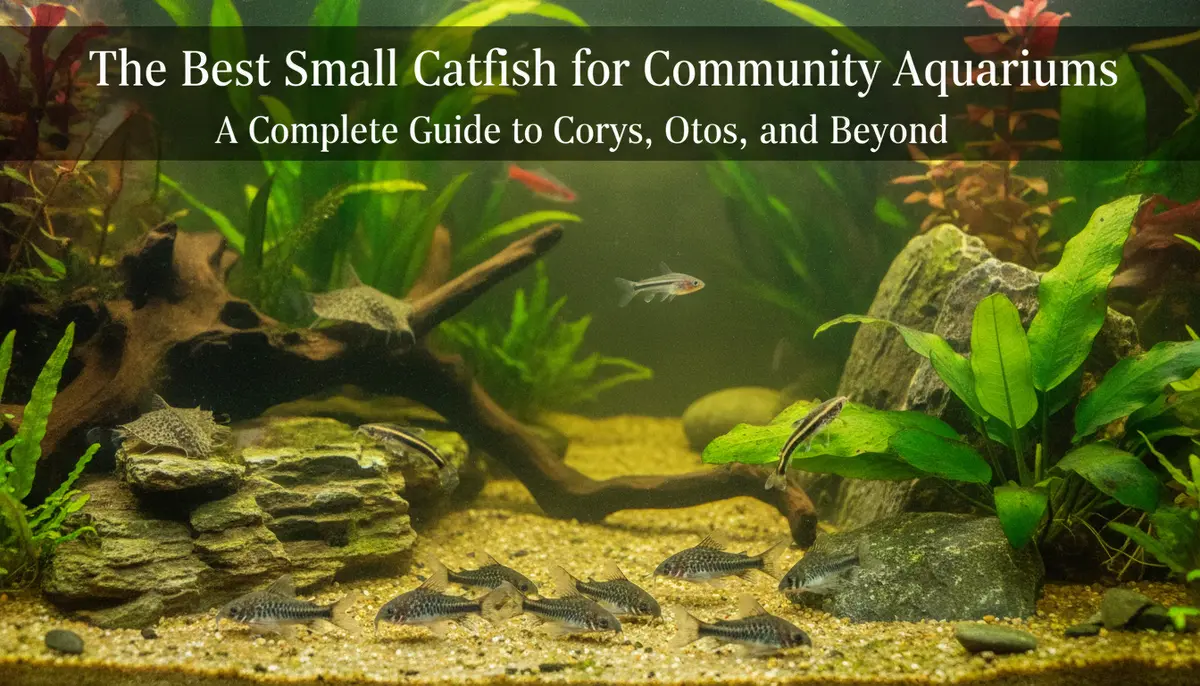
The Best Small Catfish for Community Aquariums: A Complete Guide to Corys, Otos, and Beyond
Catfish are among the most fascinating inhabitants of the freshwater aquarium world. Known for their characteristic "whiskers" (barbels) and their industrious nature, they often serve as the "clean-up crew" for many hobbyists. However, the term "catfish" covers a massive range of species, from the gargantuan Redtail Catfish (Phractocephalus hemioliopterus) that can outgrow almost any home aquarium, to the tiny, delightful Corydoras.
For the average community tank enthusiast, the goal is to find species that provide visual interest and utility without terrorizing their tank mates. By focusing on smaller, peaceful species, you can enjoy the unique behaviors of these siluriforms while maintaining a harmonious environment.
1. Corydoras Catfish: The Quintessential Community Bottom-Dweller
If there were a popularity contest for aquarium fish, the Corydoras (or "Cory") catfish would likely take the crown. With over 160 species in the genus, these armored catfish offer a variety that fits almost any aesthetic. Unlike many other catfish that are nocturnal and reclusive, Corys are active during the day, constantly shuffling through the substrate in search of food.
Popular Species and Appearance
Most Corys feature a wide head, armored scales (scutes) instead of traditional scales, and sensitive barbels used to detect food. Common varieties found in the hobby include:
- *Bronze and Albino Corys (Corydoras aeneus):* Hardy and perfect for beginners.
- *Panda Corys (C. panda):* Distinctive black patches around the eyes and tail.
- *Emerald Green Corys (C. splendens):* Known for their shimmering metallic hue.
- *Peppered Corys (C. paleatus):* Featuring a beautiful mottled pattern.
Care and Behavior
Corys are famous for their "derpy" personalities. You may see them "wink" at you (a movement of the eye to clear debris) or dart to the surface for a quick gulp of air. To keep them healthy, they should be kept in groups of at least six. They thrive in 20-gallon tanks or larger, with temperatures between 72–82°F (22–28°C) and a pH of 6.5–7.8.
Maintaining a stable temperature is vital for their metabolism; for a reliable heating solution, see our Eheim Jager Heater Review: Is This Classic Still the Gold Standard? to ensure your Corys stay within their preferred range.
Hikari Sinking Wafers for Corydoras
2. Otocinclus Catfish: The Precision Algae Eaters
While Corys handle the leftovers on the substrate, the Otocinclus (or "Oto") is the specialist for your glass and plant leaves. These small, 1.5- to 2-inch catfish are perhaps the most efficient algae eaters in the hobby, focusing on soft green algae and brown diatoms.
The "Seasoned Tank" Requirement
Otocinclus are often labeled as "fragile," but this is usually due to being placed in tanks that are too "clean." They require a mature, seasoned aquarium with plenty of natural biofilm and algae growth. They prefer soft to hard water, a pH of 6.0–7.5, and temperatures of 70–79°F (21–26°C).
Feeding and Maintenance
Because they can quickly clear a tank of algae, you must provide supplemental feeding. High-quality algae wafers and blanched vegetables like zucchini or green beans are essential. Since Otos rely on algae growth, providing the right environment for that growth—without overdoing it—is a balancing act. Choosing the Best LED Aquarium Lighting for Planted Tanks: Budget vs. Professional Grade can help you maintain the right light levels to support the biofilm these fish depend on.
Repashy Soilent Green Algae Eater Food
3. Glass Catfish: The Transparent Oddball
For those seeking something truly unique, the Asian Glass Catfish (Kryptopterus vitreolus)—also known as the Ghost Catfish—is a showstopper. Reaching about 2.5 inches, these fish are almost entirely transparent, allowing you to see their skeleton and internal organs.
Social Dynamics and Habitat
Unlike the bottom-dwelling Corys, Glass Catfish are midwater schooling fish. They are notoriously shy and will spend most of their time hiding if kept in small numbers. A group of six or more is mandatory for them to feel secure. They prefer a 20-gallon or larger tank with plenty of driftwood and live plants to provide dappled shade.
Because of their delicate appearance, they pair beautifully with a "less is more" design philosophy. If you are housing them in a high-end setup, such as one of the Best Rimless Aquariums for a Modern Home Aesthetic, their transparent bodies create a striking, ethereal effect against a minimalist backdrop.
Dietary Needs
Glass Catfish have relatively small mouths. They do best with small, high-protein foods such as baby brine shrimp, daphnia, and high-quality nano pellets. They are peaceful and should be housed with non-aggressive tank mates like tetras, danios, or smaller gouramis.
4. Upside-Down Catfish: Nature’s Gravity Defiers
The Upside-Down Catfish (Synodontis nigriventris) from West Africa is a master of perspective. As the name suggests, this species spends a significant amount of its time swimming and resting upside down. This behavior evolved to allow them to graze on the underside of submerged branches and leaves in the wild.
Identification and Behavior
These fish are splotchy brown and grow to about 3-4 inches. While they are peaceful, they are more nocturnal than Corydoras. You will often find them tucked under a piece of driftwood or a large leaf during the day, only to see them zip around the tank "inverted" once the lights go down.
Tank Setup
Because they enjoy grazing on surfaces, provide plenty of broad-leafed plants (like Anubias or Amazon Swords) and smooth driftwood. They are hardy fish that can adapt to a range of water parameters, but they appreciate a moderate current to mimic their riverine origins.
5. Substrate Selection: Protecting Sensitive Barbels
One of the most overlooked aspects of catfish care is the substrate. Catfish like Corydoras and Synodontis use their barbels to navigate and find food. If the substrate is sharp or jagged, it can cause physical trauma and lead to infections.
- Sand: The gold standard for catfish. It allows them to sift through the grains without risk of injury.
- Smooth Gravel: If using gravel, ensure it is rounded and polished. Avoid "blasted glass" or sharp fluorite substrates that can act like sandpaper on their delicate whiskers.
Keeping the substrate clean is equally important. Waste buildup in the lower levels of the tank can lead to high bacterial counts, which often manifest as "barbel erosion" in Corydoras. Regular water changes and light vacuuming of the surface layer are essential.
API Master Test Kit for Aquarium Water
6. Feeding Strategies for a Harmonious Tank
A common mistake in community tanks is assuming the catfish will live off "scraps." While they are excellent scavengers, they require a dedicated diet to thrive.
The Problem with Midwater Feeders
In a tank full of active tetras or barbs, food rarely reaches the bottom. By the time the flakes or pellets sink, the faster fish have already consumed them. To ensure your catfish stay healthy:
- Use Sinking Pellets: Specifically designed to drop straight to the bottom.
- Night Feeding: Drop food into the tank after the lights are turned off. This gives nocturnal species like the Upside-Down Catfish a chance to eat without competition.
- Target Feeding: Use a pipette or long tweezers to place frozen foods like bloodworms directly in front of shy species like Glass Catfish or Otocinclus.
7. Conclusion: Building Your Catfish Community
Small catfish species bring more than just "cleaning services" to an aquarium; they bring personality, unique biology, and a sense of activity to the lower and middle regions of the tank. Whether you choose the social and bumbling Corydoras, the specialized Otocinclus, the ethereal Glass Catfish, or the quirky Upside-Down Catfish, you are adding a layer of depth to your aquatic ecosystem.
By respecting their social needs—keeping them in groups—and providing the right substrate and specialized diet, you can ensure these "cats" live long, healthy lives in your home aquarium. Avoid the temptation of "monster" catfish and stick to these proven community favorites for a successful and stress-free hobby experience.