
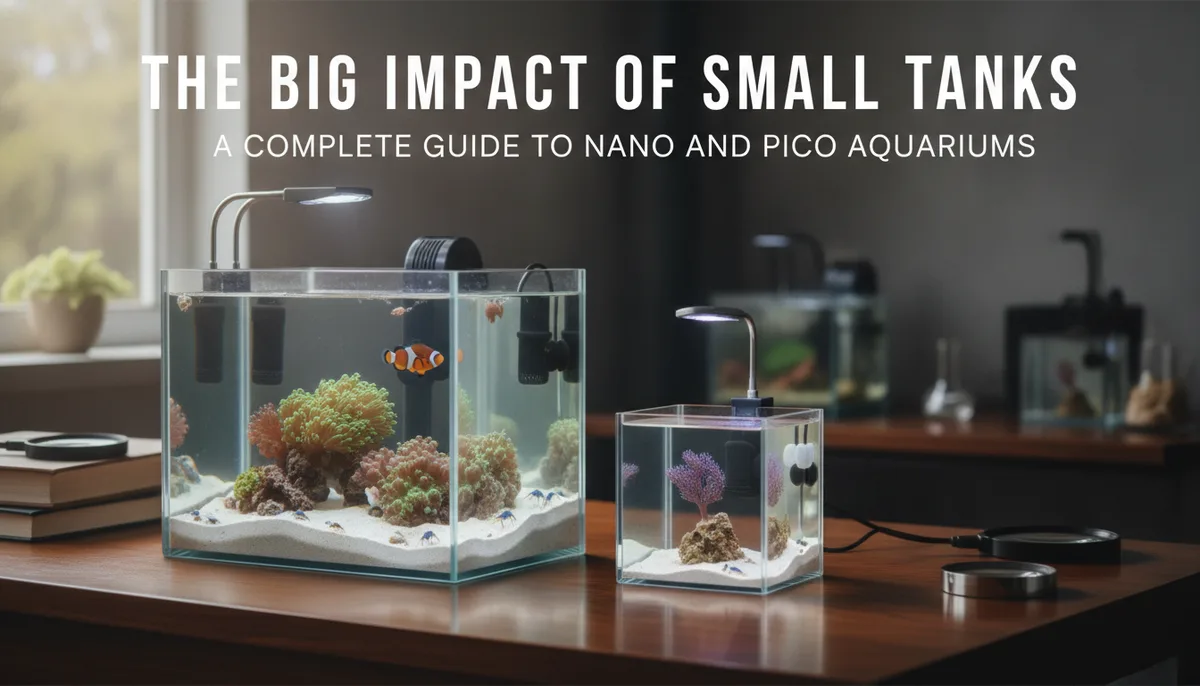
The Big Impact of Small Tanks: A Complete Guide to Nano and Pico Aquariums
The Evolution of the Nano Aquarium Hobby
For decades, the aquarium hobby was defined by a "bigger is better" mentality. Enthusiasts spent years dreaming of massive 100-gallon displays that could house large cichlids or sprawling schools of silver dollars. While those massive systems remain impressive, a quiet revolution has taken place. The passion for the underwater world has started getting smaller, and in many ways, more sophisticated.
The rise of nano tanks (typically 5 to 15 gallons) and pico tanks (under 5 gallons) has fundamentally changed how we interact with aquatic life. This shift wasn't just about saving space; it was an awakening. Hobbyists realized they could create a thriving, intricate ecosystem right on their office desk, kitchen counter, or bedside table. What once seemed like a daunting task reserved for public institutions has become an accessible art form that fits into our daily lives without disrupting our living spaces.
This movement has moved far beyond the "goldfish bowl" of the past. Today’s nano hobbyists utilize high-end glass, specialized lighting, and advanced filtration to maintain environments that are often more biologically diverse and aesthetically pleasing than the massive tanks of yesteryear.
Selecting the Perfect Nano or Pico Vessel
Choosing the right container is the first step in your nano journey. Because these systems are often placed in high-visibility areas like kitchens or offices, the aesthetic of the tank itself matters as much as what is inside it.
Beyond the Standard Rectangle
The traditional rectangular tank is still a staple, but the nano movement has introduced exciting new footprints:
- Bookshelf Aquariums: These are long and shallow, providing a wide panoramic view. They are perfect for creating "riverbed" aquascapes and offer a large surface area for gas exchange.
- Cube Tanks: A petite cube looks terrific in a kitchen next to cookbooks. The symmetrical shape allows for "island" style aquascapes that look beautiful from every angle.
- Pico Jars: Niche hobbyists are even building fascinating ecosystems in something as small as a pickle jar. While these require expert-level attention to water quality, they represent the ultimate expression of the "small world" philosophy.
When selecting a tank, many modern hobbyists prefer a cleaner look to highlight their aquascape. If you are looking for a high-end finish, exploring the Best Rimless Aquariums for a Modern Home Aesthetic can help you find a vessel that complements your interior design.
The Stars of the Small Tank: Nano Fish and Shrimp
The expansion of the nano hobby has driven a massive increase in the variety of livestock available. Twenty years ago, a local fish store might only carry neon tetras or guppies. Today, many stores feature entire rows dedicated to tiny, exotic species that thrive in smaller volumes.
Exotic Nano Fish
One of the most sought-after species is the Neon Blue Rasbora (Sundadanio axelrodi). These stunning fish bring a shimmering blue hue to the tank and are perfectly sized for nano environments. Beyond rasboras, the hobby has seen an influx of:
- New Tetra Species: wild-caught varieties that stay under an inch in length.
- Endlers and Designer Guppies: Dedicated hobbyists worldwide are creating stunning color strains that offer maximum visual impact in a small package.
The Shrimp Phenomenon
No conversation about nano tanks is complete without shrimp. The rise of Caridina and Neocaridina species is perhaps the most significant trend in the modern hobby. Shrimp like the "Ocean Blue" Neocaridina or the classic Red Cherry Shrimp have attracted a whole new generation of hobbyists.
Shrimp are the ideal nano inhabitants because they have a negligible bioload and spend their days meticulously cleaning the tank of algae and biofilm. To support these delicate creatures, many hobbyists utilize a pre-filter sponge. This simple innovation protects tiny shrimp from being drawn into the filter intake while providing a perfect surface for them to graze on microscopic food particles.
Master the Art of Feeding Small Mouths
Feeding a nano tank presents unique challenges. Because many nano fish are small and naturally preyed upon in the wild, they can be understandably shy. Furthermore, their mouths are often so small that standard flakes or pellets are physically impossible for them to consume.
Mimicking Nature
To get these fish to come out and eat, the food must mimic their natural diet of drifting microorganisms. We recommend using a fine pellet, such as Magic Small Fish Feed, which is designed to stay suspended in the water column rather than sinking immediately to the substrate. This behavior entices even the shyest fish, like dwarf gobies or timid rasboras, to venture out from their hiding spots.
The "Big Fish, Small Food" Rule
Interestingly, catering to nano creatures doesn't mean you have to ignore the rest of your community. It is a well-known secret among experienced aquarists that big fish eat small food more readily than small fish eat big food. High-quality micro-foods and live options like baby brine shrimp or daphnia are readily accepted by larger inhabitants, such as corydoras or loaches, ensuring that everyone in the tank remains well-fed without the risk of choking on oversized morsels.
Maintaining Stability in Miniature Ecosystems
While nano tanks are smaller, they actually require more vigilance than larger systems. In a 55-gallon tank, a single dead leaf or one missed water change is rarely a catastrophe. In a 5-gallon pico tank, that same dead leaf can cause a rapid ammonia spike that threatens the entire population.
The Importance of Water Quality
Keeping tinier environments healthy requires a commitment to consistency. Because the water volume is low, toxins can concentrate quickly. Regular water testing and small, frequent water changes are the keys to success.
Essential Equipment for Stability
To keep a nano tank stable, you need reliable equipment that won't fluctuate. Temperature swings are particularly dangerous in small volumes. Investing in a high-quality, adjustable heater is non-negotiable. For a deep dive into reliable heating options, check out our Eheim Jager Heater Review: Is This Classic Still the Gold Standard? to see if this hobby favorite fits your small-scale needs.
Additionally, lighting plays a massive role in nano success, especially if you are keeping live plants to help manage nitrates. Proper lighting ensures your plants grow densely enough to act as a natural biological filter. You can compare different options in our guide on the Best LED Aquarium Lighting for Planted Tanks: Budget vs. Professional Grade.
Creating a Thriving Nano Aquascape
The final piece of the nano puzzle is the aquascape. In a small tank, every rock, piece of driftwood, and plant leaf is magnified in importance.
- Scale: Use small-leafed plants like Anubias nana petite or Java Moss to make the environment look larger than it actually is.
- Negative Space: Don't feel the need to fill every inch of the tank. Leaving open space in the front or middle can create a sense of depth.
- Hardscape: Use "dragon stone" or "seiryu stone" with lots of texture. The intricate crannies of these rocks provide hiding spots for shrimp and surfaces for beneficial biofilm to grow.
By focusing on these small details, you can create a world that feels vast and infinite, proving that in the aquarium hobby, it really is a small world after all. Whether you are a seasoned veteran looking for a new challenge or a beginner with limited space, the nano movement offers a unique way to bring the beauty of nature into your home.