
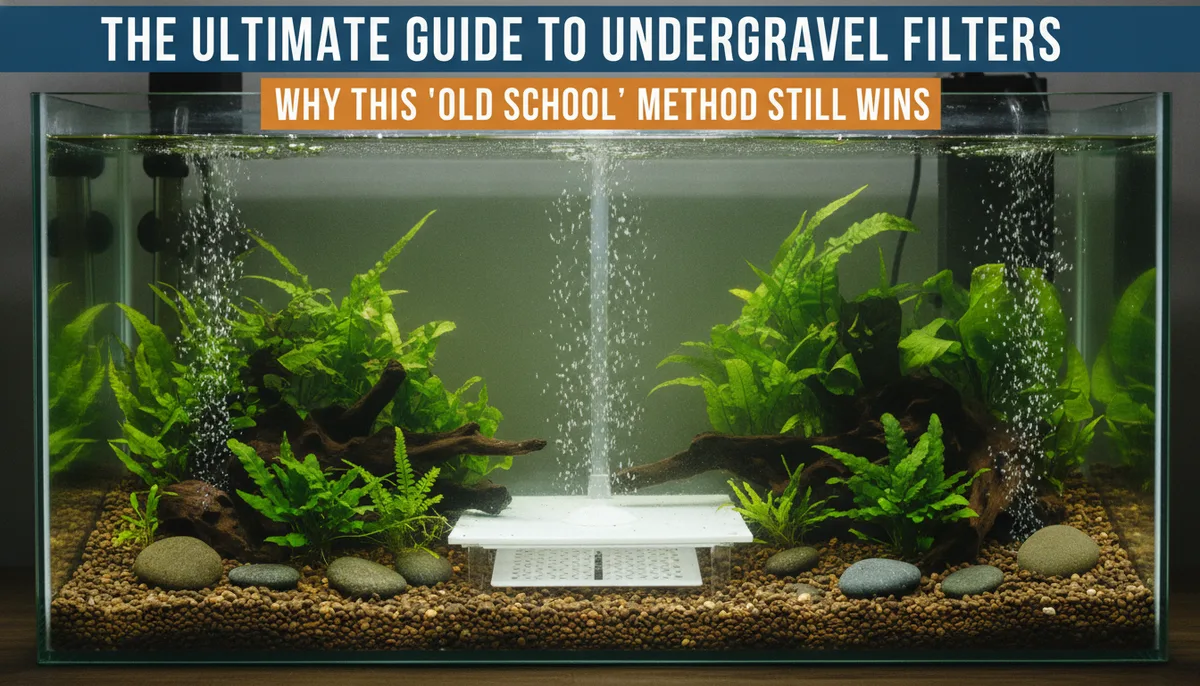
The Ultimate Guide to Undergravel Filters: Why This "Old School" Method Still Wins
In the modern era of high-tech canister filters, sleek internal power filters, and sophisticated hang-on-back systems, the humble undergravel filter (UGF) is often viewed as a relic of the past. Decades ago, you couldn’t walk into a local fish store or a serious hobbyist's fish room without seeing the tell-tale uplift tubes of a UGF in every tank.
As aquascaping trends shifted toward the use of specialized "aquasoils" and fine cosmetic sands, the undergravel filter saw a decline in popularity. However, experienced keepers know that "newer" doesn't always mean "better." For the hobbyist seeking a reliable, low-cost, and incredibly effective biological filter, the undergravel system remains a powerhouse.
In this guide, we will dive deep into how these filters work, why they are making a comeback in certain niches, and how you can successfully integrate them into a modern aquarium setup.
How Undergravel Filters Work: The Science of Substrate Filtration
The brilliance of an undergravel filter lies in its simplicity. It transforms the entire floor of your aquarium into a massive biological filter.
The Components
A standard UGF setup consists of a series of slotted plastic plates that sit on the bottom of the glass. Attached to these plates are one or more vertical "uplift tubes." These tubes extend toward the surface of the water. To power the system, an air stone is typically placed at the bottom of the uplift tube, or a powerhead (a small submersible pump) is attached to the top.
The Mechanism of Flow
When air bubbles rise through the uplift tube, they displace water, creating a vacuum effect. This siphons water from underneath the filter plates and pushes it out the top of the tube. To replace the water being pulled from under the plates, water from the main aquarium is drawn downward through the gravel bed.
As the water passes through the gravel, several things happen:
- Mechanical Filtration: Large particles of fish waste and uneaten food (detritus) become trapped in the gaps between the gravel stones.
- Biological Filtration: Because the water is constantly moving, it carries dissolved oxygen and ammonia/nitrite to the billions of beneficial bacteria living on the surface of every single piece of gravel.
- Chemical Stability: By using the entire substrate as a filter bed, you create a massive surface area that is far larger than the sponge or ceramic media found in most power filters.
The Major Benefits of Undergravel Filtration
Why would a modern hobbyist choose a UGF over a high-end canister filter? The reasons are often practical and rooted in long-term success.
1. Unmatched Reliability and Longevity
Because a UGF has no moving parts (when powered by an air pump), there is very little that can break. Unlike a canister filter that might leak or a power filter with an impeller that can jam, a UGF will theoretically last as long as the aquarium itself.
2. Safety for Delicate Inhabitants
If you are keeping long-finned bettas, tiny shrimp, or delicate fry, standard filters can be dangerous. The intake strainers on many power filters are strong enough to trap and kill small inhabitants. A UGF provides a very gentle, dispersed flow across the entire floor, making it one of the safest environments for breeding.
3. Power Outage Resiliency
If you live in an area prone to power outages, a UGF is a lifesaver. Since they run on air, you can easily switch them to a battery-backed air pump. These pumps can keep your biological filtration running for up to 40 hours, preventing a cycle crash during an emergency. For those looking to build a truly robust system, pairing a UGF with a reliable heater like the Eheim Jager Heater Review: Is This Classic Still the Gold Standard? ensures your tank remains stable even when the lights go out.
Maintenance: Debunking the "Nitrate Factory" Myth
The most common criticism of undergravel filters is that they become "nitrate factories" or "dirt traps." While it is true that debris gets trapped in the gravel, this is only a problem if the tank is neglected.
The Gravel Vacuuming Solution
Maintaining a UGF is no different than maintaining any other substrate; it just requires consistency. During your weekly or bi-weekly water changes, you must use a gravel vacuum to "deep clean" the substrate. By thrusting the vacuum into the gravel, you lift the trapped detritus out of the tank before it has a chance to break down into excessive nitrates.
Air Stone Longevity
Unlike the fine-pored wooden or ceramic air stones used in CO2 systems, the air stones provided with UGF kits are usually made of solid plastic. These are designed to resist mineral buildup and clogging, meaning you rarely, if ever, need to pull the tubes apart for cleaning.
Can Undergravel Filters Be Used in Planted Tanks?
There is a long-standing rumor that UGFs and live plants don't mix. The reality is more nuanced. While you cannot use a UGF with the specialized soils required for high-tech "Dutch style" aquascapes, many plants actually thrive with this filtration method.
The Benefit of Oxygenated Roots
In a standard gravel bed, the lower layers of substrate can become "anaerobic" (lacking oxygen). This can lead to root rot in certain species. Because a UGF is constantly pulling oxygenated, nutrient-rich water down through the roots, it can actually stimulate faster growth and prevent rot.
Choosing the Right Plants
When selecting flora, refer to our guide on How to Choose the Right Aquarium Plants: A Comprehensive Guide to a Thriving Aquascape. For a UGF setup, focus on:
- Epiphytes: Plants like Anubias and Java Fern that don't need to be buried in the substrate.
- Heavy Root Feeders (With Caution): Plants like Amazon Swords or Cryptocoryne will grow massive root systems that may eventually entwine with the filter plates. This isn't necessarily bad for the plant, but it makes moving the plant or cleaning that specific area of the plate very difficult.
Placement Strategy
If you plan to keep large, deep-rooted plants, consider placing them in areas where there are no filter plates, or keep them in small terracotta pots hidden behind rocks. This allows you to benefit from the UGF's filtration in the open areas while giving the heavy feeders a dedicated space to grow.
Selecting the Right Substrate: The 5mm Rule
The most critical factor in a successful undergravel filter setup is the substrate choice. If the substrate is too fine, it will fall through the slots in the plates, clogging the space underneath and rendering the filter useless.
- No Sand: Sand will immediately choke a UGF.
- No Soil: Aquasoils and "dirted" tanks will break down into mud, which will stop all water flow.
- The Ideal Choice: Use standard aquarium gravel with an average size of 5mm. This size is large enough to sit securely on top of the grates while allowing for maximum water flow and surface area for bacteria.
Natural Polished Aquarium Gravel 5mm
Final Thoughts: Is a UGF Right for You?
Undergravel filters are not for every tank. If you are dreaming of a minimalist iwagumi layout with a fine sand path and a lush carpet of Monte Carlo, a UGF is not the tool for the job. You would be better served looking into Best Rimless Aquariums for a Modern Home Aesthetic paired with a high-end canister filter.
However, if you are setting up a large fish room, a breeding project for shrimp or fancy guppies, or a low-maintenance community tank, the undergravel filter is an elite choice. It is cost-effective, nearly indestructible, and provides a level of biological stability that is hard to match with modern "hang-on" equipment.
By understanding the mechanics and committing to a regular gravel vacuuming routine, you can enjoy crystal-clear water and a healthy aquatic environment for years to come using one of the most time-tested methods in the hobby.