
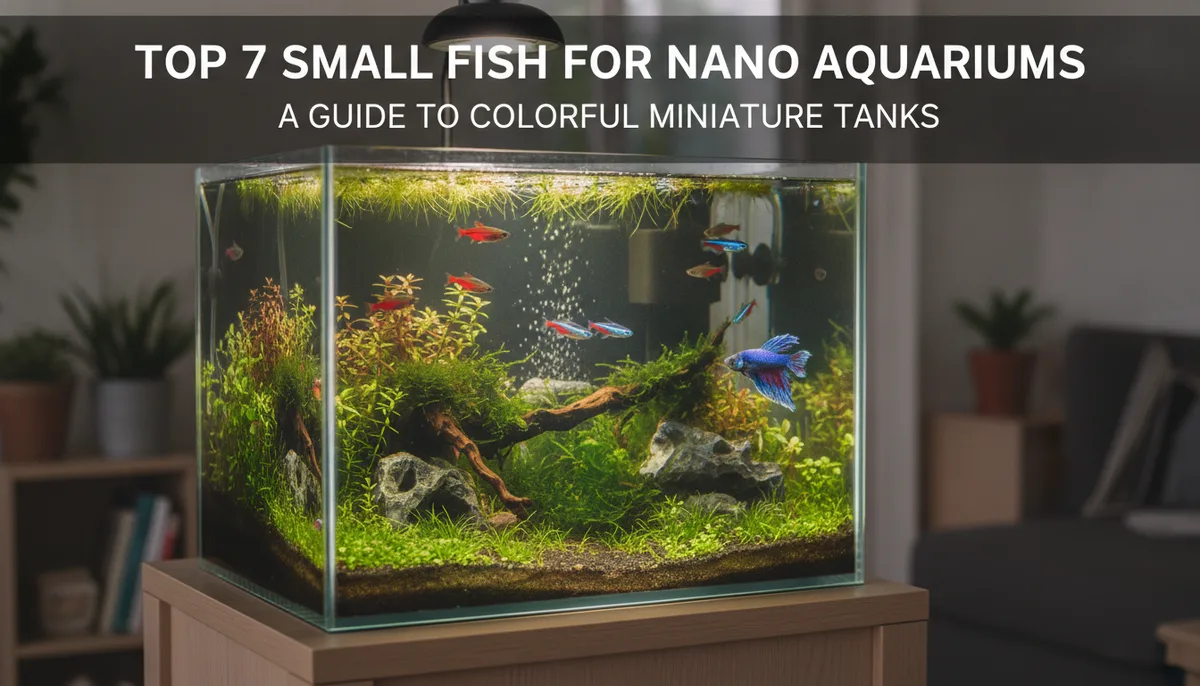
Top 7 Small Fish for Nano Aquariums: A Guide to Vibrant Miniature Tanks
The rise of the "nano tank" has transformed the aquarium hobby. No longer do you need a massive 55-gallon setup to enjoy a slice of nature in your home. Whether you are decorating a desk with a sleek 5-gallon setup or a 10-gallon planted masterpiece, the choice of livestock is the most critical decision you will make.
In a smaller volume of water, every inhabitant counts. You need fish that not only stay small but also possess the temperament and activity levels suited for confined spaces. After years of navigating the nuances of micro-ecosystems, I’ve identified seven species that stand out for their beauty, hardiness, and fascinating behaviors.
The Foundation of a Successful Nano Tank
Before diving into specific species, it is vital to understand that nano tanks require a different mindset than larger aquariums. Because the water volume is low, chemical imbalances—such as ammonia spikes or pH swings—happen much faster.
When selecting fish for these environments, you aren't just looking for "small" fish; you are looking for species with a low bioload that won't overwhelm your filtration. Choosing a high-quality enclosure is the first step in this journey. If you are looking for a centerpiece for your room, consider checking out the Best Rimless Aquariums for a Modern Home Aesthetic to find a tank that complements the beauty of these tiny fish.
1. Pygmy Corydoras: The Social Bottom Dwellers
The Pygmy Corydoras (Corydoras pygmaeus) is a masterclass in "tiny but mighty." While most Corydoras stay strictly on the substrate, Pygmies are unique because they often swim in the mid-water levels, hovering like miniature helicopters.
Why They Excel in Nano Tanks
These fish are incredibly social. Unlike larger catfish that might feel cramped in a 10-gallon, a group of six or more Pygmy Corys will school tightly, providing constant movement. They are peaceful, making them the perfect roommates for shrimp or other small rasboras.
Care Requirements
- Temperature: 70–80°F
- pH: 6.5–8.0
- Social Needs: Keep in groups of 6+ to reduce stress.
- Substrate: Use sand or fine gravel, as their delicate barbels can be damaged by sharp rocks.
Fluval Stratum Plant and Shrimp Stratum
2. Clown Killifish: The Surface Rockets
If you want a fish that looks like a hand-painted piece of art, the Clown Killifish (Epiplatys annulatus) is your answer. With their striking horizontal "bumblebee" stripes and the males' vibrant, torch-like tails, they occupy the top layer of the tank.
Behavioral Insights
Clown Killifish are ambush predators in the wild, meaning they love to hang out just under the surface, waiting for small insects. In the home aquarium, they are peaceful but can be quite shy. They are also notorious jumpers. If your tank doesn't have a tight-fitting lid, you will eventually find one on the floor.
Breeding Potential
One of the joys of keeping Clown Killies is how easily they breed in a well-planted tank. If you provide floating plants with long roots, you may eventually see tiny "frys" appearing at the surface without any intervention.
3. Celestial Pearl Danio: The Galaxy in a Tank
Commonly known as the Galaxy Rasbora, the Celestial Pearl Danio (CPD) is perhaps the most beautiful fish in the nano hobby. Their deep blue bodies are covered in gold spots that resemble a star-filled sky, contrasted by bright orange fins.
Creating the Right Environment
CPDs can be somewhat skittish. To see their best colors and behavior, a heavily planted tank is a must. They thrive in slightly cooler water (68–78°F) and appreciate a moderate flow. Because they are mid-water swimmers, they fill the "empty" space in a tank perfectly.
When setting up a home for these "jewels," lighting is key to making those gold spots pop. You can compare different setups in our guide on the Best LED Aquarium Lighting for Planted Tanks: Budget vs. Professional Grade.
Hikari First Bites Semi-Floating Fry Food
4. White Cloud Mountain Minnows: The Unstoppable Hardy Classic
Often dismissed as a "feeder fish" or a "beginner's only" species, the White Cloud Mountain Minnow is actually one of the most rewarding fish to keep. They are incredibly hardy, capable of surviving temperature ranges from 30°F to 90°F, though they prefer the 60s and 70s.
Variations and Breeding
You can find them in standard, gold, and long-finned varieties. They are active, playful, and—most importantly—they don't eat their own eggs as aggressively as other species. This makes them a fantastic choice for anyone interested in the "natural" breeding method where fry grow up alongside the parents.
5. Chili Rasbora: The Fiery Nano Gem
For those with very small tanks (5 gallons), the Chili Rasbora (Boraras brigittae) is the gold standard. They rarely exceed 0.7 inches in length, meaning their bioload is almost negligible.
Color and Diet
When first introduced, they may look pale. However, in a tank with dark substrate and plenty of tannins (from driftwood or leaves), they turn an intense, fiery red. Because they have such tiny mouths, you must provide crushed flakes or specialized micro-pellets.
Essential Parameters
- Temperature: 72–82°F
- Water Hardness: Soft to moderately hard.
- Group Size: The more, the merrier. A group of 10-12 in a 10-gallon tank looks stunning.
NorthFin Community Micro Pellet
6. Neon Green Tetra: A Fluorescent Marvel
The Neon Green Tetra is a sophisticated cousin of the common Neon Tetra. They are smaller and feature a lateral stripe that glows with a distinct green-gold hue rather than the traditional blue.
The "Top-Down" Effect
Interestingly, Neon Green Tetras are best viewed from slightly above. Their iridescent stripe is positioned in a way that catches light beautifully from a higher angle. They prefer warmer, slightly acidic water and are perfect for "blackwater" style nano tanks.
7. Fancy Guppies & Endlers: The Versatile Favorites
No list of nano fish is complete without Guppies and Endlers. Endlers, in particular, are the smaller relatives of the guppy and are perfectly scaled for nano environments.
Why Choose Endlers?
Endlers are "perpetual motion machines." They are constantly exploring, displaying to one another, and looking for food. They are also incredibly adaptable to different water types, though they prefer harder water with a higher pH.
Managing Population
The only downside to these fish is their prolific breeding. If you have males and females together, you will soon have a "population explosion." For a nano tank, many aquarists choose to keep an "all-male" group to enjoy the vibrant colors without the risk of overstocking.
Maintaining Stability in the Nano World
Keeping these small fish healthy requires more than just picking the right species; it requires stable equipment. Because nano tanks lose heat quickly, a reliable heater is non-negotiable. For a deep dive into one of the most trusted names in the industry, read our Eheim Jager Heater Review: Is This Classic Still the Gold Standard?.
Feeding Strategy
In a small tank, overfeeding is the fastest way to crash your cycle. Nano fish have tiny stomachs. It is better to feed very small amounts twice a day than one large meal that ends up rotting at the bottom.
Filtration for Nano Tanks
While many people use small hang-on-back filters, the "old school" methods often work best for nano setups. Sponge filters or undergravel filters provide excellent biological filtration without creating a current so strong that it blows your tiny fish around.
Aquarium Solutions Sponge Filter
Final Thoughts on Nano Fish Selection
Choosing fish for a small aquarium is about balance. You want a mix of colors, swimming levels, and behaviors that create a cohesive community. By starting with hardy species like the White Cloud Mountain Minnow or the Pygmy Corydoras, you can build the confidence needed to eventually keep more sensitive species like the Chili Rasbora or Celestial Pearl Danio.
Remember, the smaller the tank, the more significant your role as a "tank keeper" becomes. With the right selection and a bit of patience, your nano aquarium can become a thriving, vibrant world in miniature.