
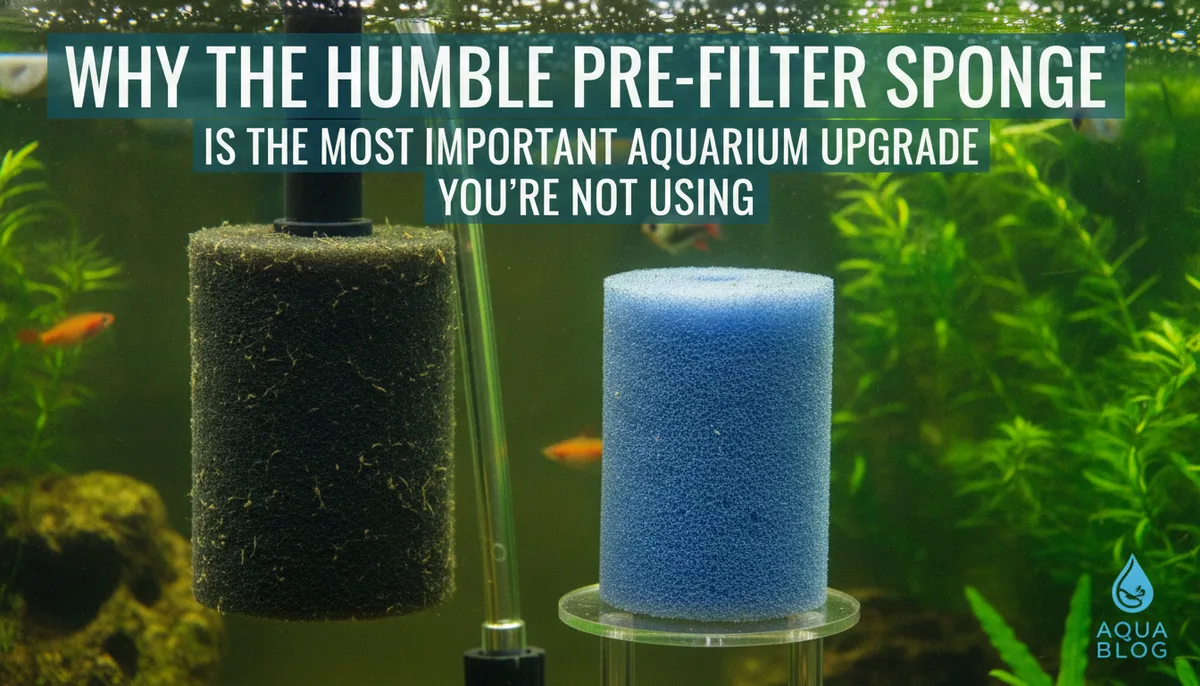
Why the Humble Pre-Filter Sponge is the Most Important Aquarium Upgrade You’re Not Using
In the world of high-tech aquascaping, CO2 injectors, and professional-grade lighting, it is easy to overlook the simplest components of a successful aquarium. We often obsess over the latest Best LED Aquarium Lighting for Planted Tanks: Budget vs. Professional Grade while ignoring the very point where water enters our filtration system.
The pre-filter sponge is arguably the most cost-effective "hack" in the hobby. While it may look like a simple piece of foam, its impact on the health, stability, and maintenance of an ecosystem is profound. At Aquarium Co-Op, the philosophy has always been about "organic innovation"—finding simple tools that transform the hobbyist's experience. The pre-filter is the ultimate expression of that credo.
The Evolution of the Pre-Filter: From DIY to Standard Equipment
Years ago, if you wanted to protect delicate inhabitants from being sucked into a power filter, you had to get creative. Hobbyists would "hack" together solutions using pantyhose, rubber bands, or chunks of coarse foam zip-tied to intake tubes. These DIY fixes were often unsightly and prone to clogging, but they were necessary.
Recognizing this gap in the market, Aquarium Co-Op became an early champion of the manufactured pre-filter sponge. By developing sponges specifically designed to fit the most common filter types—and creating custom intake adapters for popular models like the Seachem Tidal, Marineland HOBs, and Fluval canisters—the pre-filter was transformed from a clunky DIY project into a streamlined, essential piece of equipment.
Aquarium Co-Op Pre-Filter Sponge Multi-Pack
Protecting Your Most Fragile Inhabitants
The primary reason most aquarists first seek out a pre-filter is safety. Standard filter intakes are designed to pull in water with significant force, which can be a death sentence for smaller creatures.
Guarding Fry and Shrimplets
If you are breeding fish or keeping freshwater shrimp, a pre-filter is non-negotiable. Newborn fry and shrimplets are often no larger than a grain of rice and lack the swimming strength to fight the suction of a powerful hang-on-back (HOB) or canister filter. Without a sponge barrier, these precious inhabitants are frequently pulled into the filter media or, worse, the impeller.
Protecting Microorganisms and "Good" Snails
Beyond the fish we can easily see, our tanks are home to a massive population of microorganisms. Scuds, seed shrimp, and various micro-crustaceans form the backbone of a healthy ecosystem. Furthermore, "pest" snails and ornamental snails alike can easily get stuck in intake slats. When these creatures perish inside a filter, they decompose in a hidden area, leading to unexplained ammonia spikes that can crash a cycle. A pre-filter keeps these creatures in the main tank where they belong.
The Science of the "Seasoned" Sponge
One of the most significant benefits of a pre-filter is the added surface area for biological filtration. As water passes through the sponge, it doesn't just lose its debris; it becomes "seasoned."
Biological Filtration Before the Filter
The sponge provides a massive amount of surface area for nitrifying bacteria to colonize. Because the pre-filter is the first thing the water hits, these bacteria have access to highly oxygenated water and a constant stream of nutrients. In many ways, this mimics the benefits of "old school" methods like those discussed in The Ultimate Guide to Undergravel Filters: Why This "Old School" Method Still Wins. By the time the water enters the main filter canister or reservoir, much of the biological processing has already begun.
A Natural Buffet for Grazers
In a mature tank, the pre-filter sponge becomes a living biofilm warehouse. If you watch your tank throughout the day, you will likely see shrimp, snails, and even nano fish like Otocinclus or Pygmy Corydoras grazing on the surface of the sponge. It effectively acts as a 24/7 buffet, concentrating organic particles and biofilm in one accessible location.
Mechanical Efficiency: Why Coarse is King
A common mistake among beginners is choosing the finest possible sponge for a pre-filter, thinking it will make the water clearer. However, experience has shown that porous, coarse sponges are vastly superior.
Maintaining Flow and Reducing Clogging
Fine sponges clog almost instantly. As they trap tiny particles, the pore space vanishes, causing the filter's flow rate to drop significantly. This puts unnecessary strain on the filter motor and reduces the overall turnover rate of the tank.
Coarse sponges, like the ones standardized by Aquarium Co-Op, are designed to catch the "big stuff"—leaf litter, excess food, and waste—while allowing water to pass through freely. This ensures that your filter maintains its intended GPH (gallons per hour) while still providing the protection and biological benefits mentioned above.
Protecting the Filter Motor
Sand, small gravel, and hard debris can wreak havoc on a filter's impeller. By acting as a gatekeeper, the pre-filter ensures that only water and microscopic particles reach the moving parts of your filtration system. This can add years to the lifespan of an expensive canister filter or HOB.
Installation and Compatibility
One of the hurdles to using pre-filters in the past was the lack of compatibility with modern, proprietary intake designs. Standard intake tubes are round, but many high-end filters now use telescopic or uniquely shaped intakes.
Using Adapters for a Perfect Fit
To solve this, specific adapters have been engineered. For example, the Seachem Tidal series is widely considered one of the best HOB filters on the market, but its intake is not a standard round tube. By using a custom-molded intake adapter, you can slide a standard Aquarium Co-Op pre-filter sponge onto the unit securely. Similar solutions exist for Fluval canister filters and Marineland units, ensuring that no matter your gear, you can enjoy the benefits of a pre-filter.
If you are running a high-end setup, such as those featured in our guide on Best Rimless Aquariums for a Modern Home Aesthetic, you might worry about the visual impact of a black sponge. However, most aquarists find that once the sponge is covered in a bit of moss or tucked behind a piece of driftwood, it blends seamlessly into the "nature aquarium" look.
Maintenance: The Right Way to Clean
A pre-filter sponge is a "front-line" tool, meaning it will get dirty. However, cleaning it is significantly easier than tearing down a canister filter.
- The Bucket Method: During your regular water change, place a small container or a plastic bag under the sponge before lifting it out of the tank. This prevents debris from falling back into the water column.
- The Squeeze: Place the sponge in a bucket of tank water (not tap water, as chlorine will kill the beneficial bacteria). Squeeze it several times until the water in the bucket is dark and the sponge feels light again.
- Reinstall: Slide it back onto the intake or adapter.
By doing this every 1–2 weeks, you will find that the media inside your main filter stays clean for months at a time. Instead of deep-cleaning your canister filter every month, you might only need to open it once or twice a year.
Conclusion: A Simple Tool for a Better Hobby
The pre-filter sponge is a testament to the idea that you don't need expensive gadgets to see a massive improvement in your aquarium's health. It protects your livestock, enhances your biological filtration, and saves you time on maintenance.
Whether you are a shrimp breeder trying to save every shrimplet or a community tank keeper looking to extend the life of your equipment, the pre-filter is the single best investment you can make for under $10. It is a small hack that truly transformed the hobby, allowing us to focus more on enjoying nature and less on cleaning filters.