
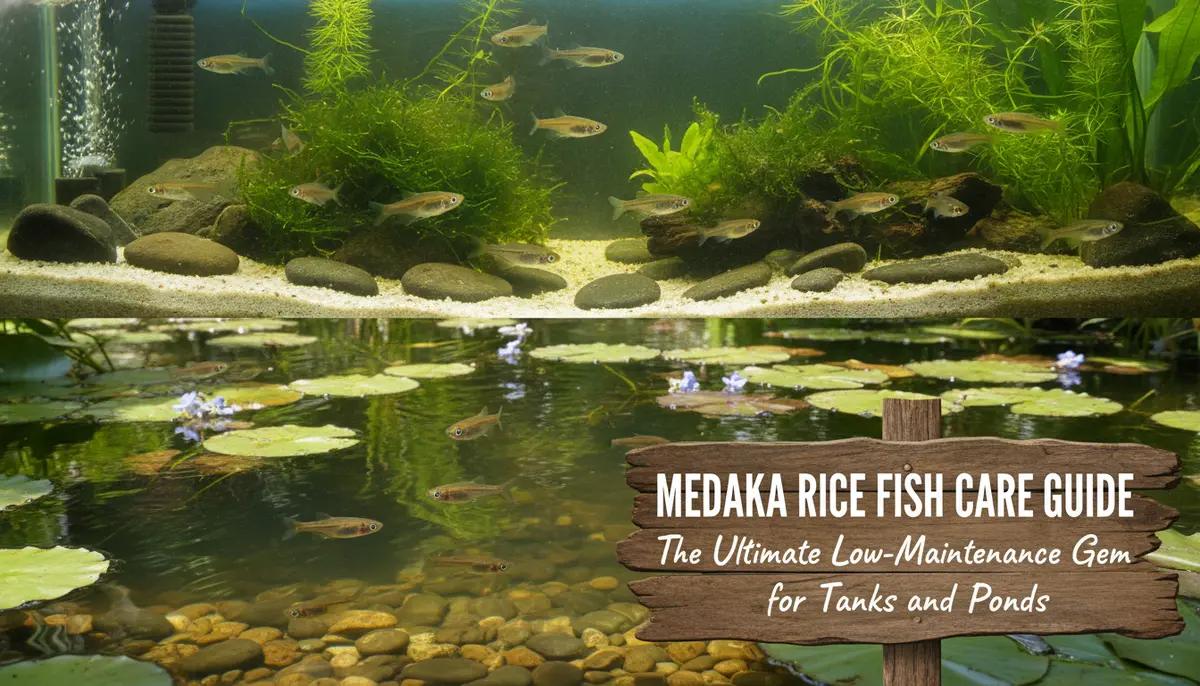
Medaka Rice Fish Care Guide: The Ultimate Low-Maintenance Gem for Tanks and Ponds
The Fascinating History and Resilience of the Medaka
The Medaka rice fish (Oryzias latipes) is far more than just a colorful addition to a nano tank. For centuries, these fish have been a staple of Japanese culture, prized for their hardiness and elegance in traditional garden ponds. However, their significance extends beyond the hobby. Due to their rapid reproductive cycle and high tolerance for varying environmental conditions, Medaka have become a cornerstone of scientific research in fields like genetics, toxicology, and developmental biology.
Perhaps their most famous claim to fame occurred in 1994, when Medaka became the first vertebrate species to successfully mate and produce viable offspring in space. This historic mission aboard the Space Shuttle Columbia proved that the gravitational shifts of orbit did not hinder their reproductive biology, cementing their status as one of the hardiest fish known to man.
In the wild, these fish are found across Japan, Korea, China, and Vietnam. Their genus name, Oryzias, is derived from the Greek word for "rice," a nod to the flooded rice paddies where they are most commonly found. While they were once considered a "common" fish, the recent "Medaka Boom" in the global aquarium trade has led to the development of hundreds of stunning color morphs and fin varieties.
Understanding Medaka Varieties: From Miyuki to Orochi
While the wild-type Medaka is often a subtle silver or cream color, selective breeding has transformed them into living jewels. Today, hobbyists can choose from a wide array of "strains," some of which command high prices for their rarity and color intensity.
- Miyuki (Blue Gloss): These are famous for their iridescent blue "internal" glow that runs along the spine. They are particularly stunning when viewed from above in a pond.
- Yokihi (Orange/Gold): One of the most popular strains, these fish exhibit a deep, rich orange hue that rivals the color of high-quality goldfish but in a much smaller package.
- Orochi (Matte Black): A highly sought-after strain that maintains a solid, velvet-black color regardless of the background or lighting conditions.
- Platinum White: These fish offer a clean, snowy aesthetic that pops beautifully against a heavily planted green background.
- Lame (Sparkle): These varieties feature reflective scales that look like glitter sprinkled across the fish’s body.
Because Medaka are often bred for "top-down" viewing in traditional Japanese ceramic pots, many of these color traits are specifically selected to look best when viewed from the surface. If you are looking for a sleek setup to showcase these varieties indoors, consider exploring the Best Rimless Aquariums for a Modern Home Aesthetic to provide an unobstructed view of their shimmering scales.
Medaka rice fish eggs for sale
Ideal Tank Setup and Environmental Requirements
One of the primary reasons Medaka are recommended for beginners is their extreme adaptability. They are euryhaline, meaning they can survive in both freshwater and brackish environments, and they possess a massive temperature tolerance.
Temperature and Water Chemistry
Medaka thrive in a temperature range of 60–75°F (16–24°C). While they can survive in water near freezing or as high as 90°F, extreme temperatures often shorten their lifespan by accelerating their metabolism. In most homes, a heater is completely unnecessary. They prefer a pH between 6.5 and 8.5 and thrive in moderately soft to very hard water.
Filtration and Flow
In their natural habitat, Medaka live in slow-moving or stagnant waters like marshes and rice paddies. Therefore, they do not appreciate heavy currents. A simple sponge filter is the gold standard for Medaka care; it provides gentle aeration and mechanical filtration without tossing the fish around the tank.
aquarium sponge filter for 10 gallon tank
Indoor vs. Outdoor Keeping
Medaka are equally at home in a 10-gallon indoor aquarium or an outdoor "mini pond." For outdoor setups, enthusiasts often use large ceramic bowls or heavy-duty plastic tubs.
- Indoor: Use a tight-fitting lid, as Medaka are known jumpers. Incorporate plenty of floating plants like Water Lettuce or Frogbit to mimic their natural environment and provide security.
- Outdoor: Ensure the container is deep enough to buffer against rapid temperature swings. Floating plants are essential here to provide shade and natural filtration.
Dietary Needs: What to Feed Your Rice Fish
Medaka are omnivores with a preference for feeding at the water's surface. This is evidenced by their upward-facing mouths. To keep them healthy and vibrant, a varied diet is essential.
- Dry Foods: High-quality crushed flakes or micro-pellets are excellent staples. Look for foods specifically formulated for "small-mouth" fish or "nano" species.
- Live and Frozen Foods: They go crazy for baby brine shrimp, daphnia, and tubifex worms.
- Natural Foraging: In outdoor ponds, Medaka will naturally hunt mosquito larvae, providing excellent pest control for your garden.
To ensure your fish are getting the best nutrition possible, you may want to supplement their diet with specialized micro-foods.
high protein micro pellets for rice fish
Compatible Tank Mates for a Peaceful Community
Medaka are exceptionally peaceful and energetic fish. They do best in schools of at least six individuals. When choosing tank mates, you must select species that share their preference for cooler, "sub-tropical" temperatures.
Excellent Tank Mates Include:
- White Cloud Mountain Minnows: These share the same temperature requirements and active swimming style.
- Hillstream Loaches: Perfect for the bottom of the tank, provided there is enough oxygen.
- Shrimp and Snails: Amano shrimp and various snails are great cleaners. While Medaka can live with Neocaridina (Cherry Shrimp), they may snack on the occasional shrimplet.
- Small Catfish: For those looking to add more diversity to the bottom of the tank, check out The Best Small Catfish for Community Aquariums: A Complete Guide to Corys, Otos, and Beyond.
Avoid housing them with large or aggressive fish like Cichlids or large Barbs, as the Medaka’s small size makes them an easy target for predation.
Breeding Medaka: The "Easy Mode" of Fish Reproduction
If you are interested in fish breeding, the Medaka is perhaps the best species to start with. They are incredibly prolific and reach sexual maturity in just a few months.
Identifying Males and Females
Distinguishing the sexes is straightforward once the fish are mature.
- Females: Generally larger and more rounded, especially when carrying eggs. Their anal fin is smaller and more triangular.
- Males: Thinner with a larger, more rectangular anal fin that may have a slight notch or fringe.
The Spawning Process
Unlike many fish that scatter eggs and forget them, the female Medaka carries a cluster of eggs attached to her vent for several hours after mating. She then swims through vegetation, "brushing" the eggs off onto plants or spawning mops.
To maximize fry survival:
- Spawning Mops: Use DIY yarn mops or live plants like Java Moss.
- Egg Collection: Remove the mops once you see eggs attached and move them to a separate container with similar water parameters. This prevents the adults from eating the eggs or fry.
- Fry Care: The eggs usually hatch in 7–14 days depending on the temperature. The fry are tiny and require "infusoria" or specialized powder foods for the first week before they can graduate to baby brine shrimp.
spawning mop for rice fish breeding
Conclusion: Why You Should Keep Medaka
The Medaka rice fish is a testament to the idea that a fish doesn't have to be large or demanding to be deeply rewarding. Whether you are a scientist fascinated by their genetics, a pond lover looking for a hardy resident for a patio bowl, or a nano-tank enthusiast seeking a splash of "Miyuki" blue, the Medaka fits the bill.
Their combination of historical significance, ease of breeding, and stunning variety makes them a "must-try" species for any hobbyist. By providing them with clean water, a varied diet, and a few floating plants, you can enjoy the lively presence of these Japanese gems for years to come.