
The Complete Guide to Tissue Culture Aquarium Plants: Are Lab-Grown Greens Better?
Walking into a modern fish store, you will likely see two very different ways of buying greenery for your tank. On one side are the traditional potted plants, their lush leaves swaying in the current of a holding tank. On the other are small, sealed plastic cups containing tiny, vibrant plantlets nestled in a clear gel or liquid.
These "lab-grown" specimens, known as tissue culture plants, have revolutionized the aquascaping hobby. But for many hobbyists, the scientific nature of these plants can be a bit intimidating. Are they harder to grow? Why are they so small? And most importantly, are they worth the investment compared to the tried-and-true potted versions?
What are Tissue Culture Plants?
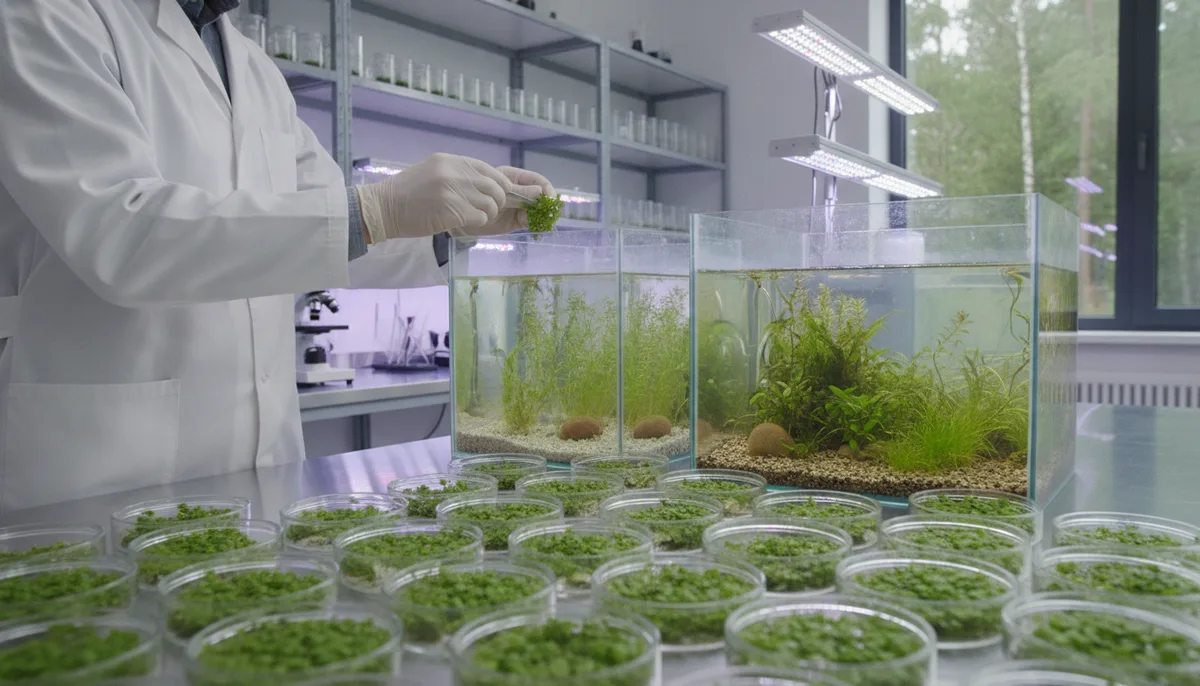
The term “tissue culture” (sometimes called “in vitro” or “lab-grown”) sounds like something out of a biology textbook, but the concept is quite elegant. To create these plants, a laboratory takes a tiny tissue sample or a small part of a healthy parent plant.
This sample is then placed into a sterile environment—usually a small cup or tube—filled with a specialized medium. This medium contains a precise cocktail of nutrients, vitamins, and plant growth hormones designed to trigger rapid cell division. In the past, this was almost always a gelatinous agar, but many modern facilities now use a liquid medium.
As the sample absorbs these nutrients, it essentially clones itself, growing into dozens of tiny, identical versions of the original plant. This process is not unique to the aquarium industry; it is the same technology used to mass-produce rare houseplants, such as the highly sought-after Monstera deliciosa ‘Thai Constellation’ variety, or to ensure garden crops are disease-free.
The Advantages of the "In Vitro" Method
For the dedicated aquarist, the primary draw of tissue culture plants is the guarantee of purity. Because these plants are grown in a closed, sterile laboratory environment, they are 100% free from the common "hitchhikers" that plague the hobby.
1. A Pest-Free Guarantee
When you buy a traditional plant from a dealer's tank, you run the risk of introducing unwanted guests. These can include:
- Pest Snails: Bladder snails, ramshorn snails, or Malaysian trumpet snails often hide their eggs on the underside of leaves.
- Algae: Cladophora, black beard algae, or staghorn algae can easily transfer from a store tank to yours.
- Invasive Plants: A single strand of duckweed or Utricularia (bladderwort) can quickly take over your aquarium.
Tissue culture plants eliminate these risks entirely. If you are aiming for a pristine, "high-end" look in best rimless aquariums for a modern home aesthetic, starting with sterile plants is the best way to ensure your vision isn't compromised by an outbreak of pests.
2. Higher Yield for Your Money
At first glance, a tissue culture cup might look expensive because the plants are so small. However, if you look closer, you’ll find that a single cup often contains 10 to 20 individual stems or plantlets. When compared to a single potted plant that may only have three or four stems, the tissue culture cup often provides more "plant matter" per dollar, provided you have the patience to let them grow.
3. Genetic Consistency
Because tissue culture is a cloning process, you are guaranteed to get the exact traits of the parent plant. This is particularly important for variegated species or specific cultivars where you want a very specific leaf shape or color.
The Challenges: Why Tissue Culture Isn't Always Easy
Despite their sterile advantages, tissue culture plants come with a learning curve. They are not "plug and play" in the same way a large potted Amazon Sword might be.
The Acclimation "Melt"
The most common complaint with tissue culture plants is that they "melt" shortly after being added to the tank. This happens because the plants are transitioning from a 100% humidity, CO2-rich, and nutrient-packed laboratory environment to your aquarium water.
During this transition, the plant may shed its "lab-grown" leaves to conserve energy while it develops a new root system and leaves that are adapted to your specific water chemistry. To minimize this, ensuring your tank has best LED aquarium lighting for planted tanks: budget vs. professional grade is crucial, as the tiny plants need ample energy to fuel this transition.
Fragility and Size
Tissue culture plants are juveniles. Their stems are thin, and their root systems are virtually non-existent. This makes them difficult to plant in coarse substrate, as they tend to float away. You will often need a specialized toolset to handle them properly.
Potted Plants: The Robust Alternative
While tissue culture is the "clean" choice, traditional potted plants remain the "sturdy" choice. These plants are typically grown emersed (out of water) in large greenhouses, with their roots firmly established in rock wool.
The Benefits of Potted Plants
- Instant Impact: Potted plants are much larger. If you want your tank to look "finished" on day one, potted is the way to go.
- Hardiness: Because they have established root systems and thicker stems, they are far more resilient to fluctuating water parameters. They are less likely to be uprooted by curious fish or strong filter currents.
- Ease of Planting: You can simply bury the roots (after removing the plastic pot and most of the rock wool) and the plant is ready to go.
The Downsides of Potted Plants
The main drawback, as mentioned, is the risk of pests. Additionally, potted plants also go through a transition period. Since they are often grown emersed, they must convert to their submersed (underwater) form, which can also result in some leaf loss and melting. If you notice your new plants developing small holes during this phase, it may not just be transition stress; it could be a sign of a nutrient gap. Check our guide on why your aquarium plants have pinholes: the ultimate guide to potassium deficiency to troubleshoot health issues in newly planted tanks.
How to Prepare and Plant Your Selection
Regardless of which type you choose, proper preparation is the key to success.
Preparing Tissue Cultures:
- Open the Cup: Do not open the cup until you are ready to plant, as the sterile environment is lost once the seal is broken.
- Rinse the Medium: Gently remove the plant mass and rinse away the clear gel or liquid medium under room-temperature tap water. This medium is high in sugar and nutrients; if left on the plant, it can trigger a localized algae bloom or fungal growth in your tank.
- Separate the Stems: Use your fingers or tweezers to gently pull the clump apart into smaller portions.
- Planting: Use fine-tipped tweezers to push the small roots deep into the substrate.
Preparing Potted Plants:
- Remove the Pot: Carefully squeeze the plastic basket and slide the plant out.
- Remove the Rock Wool: This is the most tedious part. Gently pick away the rock wool from the roots. You don't need to get every single fiber, but removing the bulk of it prevents the wool from rotting in your substrate.
- Trim the Roots: If the roots are incredibly long, you can trim them slightly to encourage new growth once planted.
Which Should You Choose?
The decision between tissue culture and potted plants usually comes down to the specific needs of your aquarium and your personal patience level.
Choose Tissue Culture if:
- You are starting a brand new "high-tech" aquascape with CO2 injection.
- You are terrified of snails or duckweed entering your system.
- You are planting a large area with carpeting plants (like Hemianthus callitrichoides 'Cuba') and want the most value for your money.
- You enjoy the process of watching a tiny plant grow into a massive specimen.
Choose Potted Plants if:
- You have a "low-tech" setup without CO2.
- You have large or boisterous fish (like Cichlids or large Goldfish) that might uproot tiny tissue culture plantlets.
- You want an "instant" look and don't want to wait months for the tank to fill in.
- You are a beginner who wants the hardiest plants possible to survive the initial learning curve.
In many cases, the best approach is a mix of both. You might use large potted plants for your background to create immediate height and structure, while using tissue culture cups for your foreground and midground to ensure a clean, pest-free carpet. By understanding the science behind these lab-grown wonders, you can make an informed choice that leads to a lush, thriving underwater garden.