
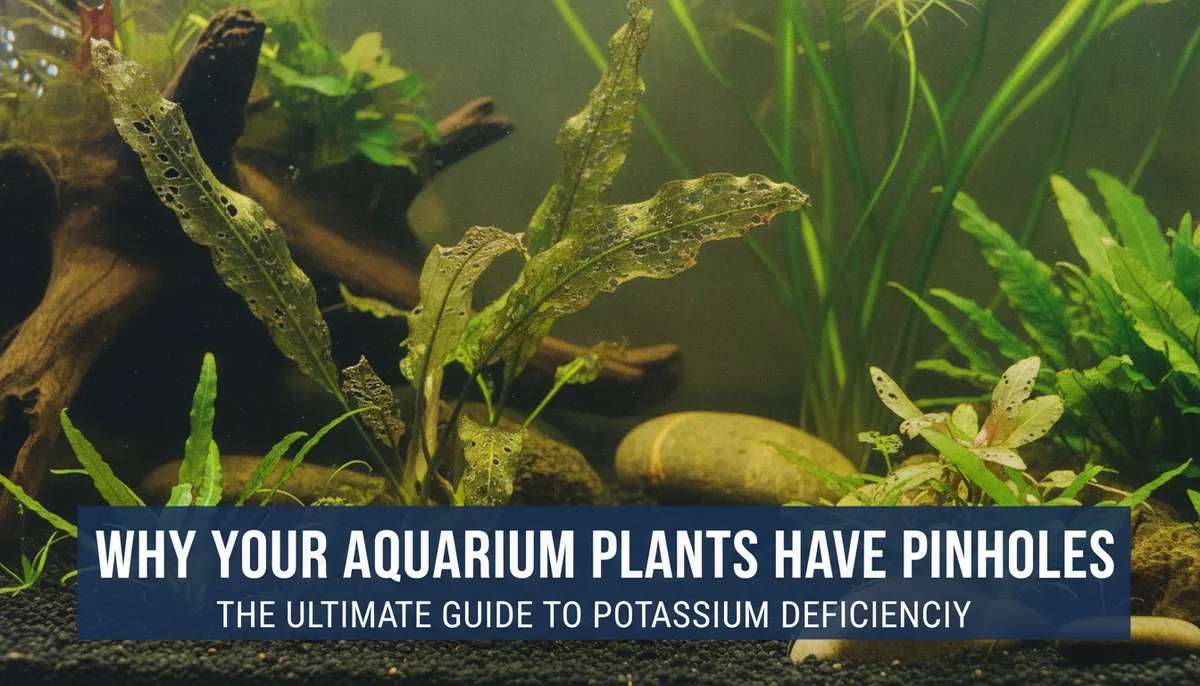
Why Your Aquarium Plants Have Pinholes: The Ultimate Guide to Potassium Deficiency
Maintaining a thriving underwater garden is a balancing act that mirrors the care of the fish themselves. Just as your livestock requires a healthy diet and pristine water parameters to reach their full potential, your aquatic plants require a specific "diet" of light and nutrients to flourish. Without the proper building blocks, even the most expensive aquascapes can quickly succumb to melting leaves and stunted growth.
To grow successfully, plants require two categories of nutrients: macronutrients and micronutrients. Macronutrients, including nitrogen (N), phosphorus (P), and potassium (K), are needed in large quantities. Micronutrients, such as magnesium and zinc, are required only in trace amounts. While many all-in-one fertilizers provide a baseline of these elements, potassium remains one of the most common "missing links" in high-performance or specialized aquariums.
The Biological Role of Potassium in Aquatic Plants
Potassium is a powerhouse element responsible for a staggering array of vital functions within both terrestrial and aquatic plant species. Unlike nitrogen and phosphorus, which become part of the plant's physical structure (like proteins or DNA), potassium remains largely in the plant’s cell sap. It acts as a regulator, ensuring that the biological "machinery" of the plant runs smoothly.
One of its most critical roles is the regulation of water and nutrient movement between plant cells. This is achieved through the control of the stomata—microscopic pores on the leaf’s surface. By opening and closing these pores, potassium allows the plant to manage gas exchange and water loss. Furthermore, potassium is a key player in photosynthesis and protein synthesis; it activates dozens of enzymes that drive the plant's metabolism.
Perhaps most importantly for the aquarist, potassium acts as a transport system. It moves sugars, starches, and other organic compounds from the leaves to other parts of the plant, such as bulbs, tubers, and new growth tips. When this transport system breaks down due to a deficiency, the entire plant’s health begins to spiral.
Identifying Potassium Deficiency: The Pinhole Phenomenon
How do you know if your plants are "hungry" for potassium? Because potassium is a mobile nutrient, the plant has the ability to prioritize its resources. When the water column is depleted of potassium, the plant will strip the nutrient from its older, existing leaves and move it to the newest shoots to ensure the survival of the growing tip.
This leads to a very distinctive visual symptom: pinholes. If you notice small, clean holes appearing in the older leaves of your Amazon Swords, Hygrophila, or Ferns, you are likely looking at a potassium deficiency. These holes are often rimmed with a thin margin of brown or yellow. If the deficiency is not corrected, these pinholes will gradually expand, eventually consuming the entire leaf until it decays and falls off.
If you are seeing yellowing at the very tips of the leaves or stunted new growth, you might be dealing with a different nutrient issue. However, those "shotgun holes" in older foliage are the classic calling card of a potassium shortage.
When All-in-One Fertilizers Aren't Enough
For many hobbyists, a high-quality all-in-one fertilizer like Easy Green is more than sufficient. Easy Green contains a robust 9.21% concentration of soluble potash (K2O), providing the correct ratios of macronutrients and micronutrients for the average low-to-medium light tank.
Aquarium Co-Op Easy Green All-in-One Fertilizer
However, certain tank setups have a higher "metabolic rate" than others. If you are running a "high-tech" aquarium—meaning you are using carbon dioxide (CO2) injection and high-intensity lighting—your plants are growing at an accelerated pace. In these environments, plants often consume potassium much faster than they consume nitrogen or phosphorus.
Furthermore, specific plant species are known as "potassium hogs." Java Fern and Anubias, while generally considered easy-to-grow low-light plants, thrive in environments with elevated potassium levels. If you notice these specific plants browning or developing holes while your faster-growing stem plants look fine, it is a clear sign that supplemental potassium is needed.
To ensure your high-tech setup is performing at its peak, it is also essential to pair your nutrient regimen with the right hardware. For more on optimizing your light cycles, see our guide on the Best LED Aquarium Lighting for Planted Tanks: Budget vs. Professional Grade.
How to Supplement with Easy Potassium
When the baseline fertilizer isn't meeting the demand, a targeted supplement like Easy Potassium is the solution. This supplement contains a 9.12% concentration of soluble potash derived from potassium sulfate and potassium citrate. Importantly for the community tank owner, it is formulated to be completely safe for fish, shrimp, snails, and other sensitive invertebrates.
Aquarium Co-Op Easy Potassium Supplement
Dosing is straightforward, but the method depends on the size of the bottle you are using:
- The 500 ml (16.9 oz) Bottle: This size is ideal for larger tanks or multi-tank galleries. It features a pump head for quick application. Dosing 1 pump (1 ml) per 10 gallons of water adds 2 ppm (parts per million) of potassium to your tank.
- The 120 ml (4 oz) Bottle: Perfect for nano tanks or desktop setups, this bottle uses a dropper cap. Dosing 2 drops per 1 gallon of water adds 2 ppm of potassium.
Establishing a Dosing Schedule
If you suspect a deficiency, the best approach is to start slowly. Consistency is more important than sheer volume when it comes to plant health.
- Initial Phase: Add your calculated dose of Easy Potassium once a week, ideally after your weekly water change.
- Observation: Wait approximately two weeks. Because potassium is used for new growth and maintaining current leaves, you won't see the pinholes in old leaves "heal," but you should see that new leaves remain hole-free and older leaves stop deteriorating further.
- Adjustment: If the symptoms persist, increase the frequency to two or three times a week.
Most planted aquarium experts recommend aiming for a concentration of 5–20 ppm of potassium in the water column. Unlike nitrates, which can become toxic to fish at high levels, or phosphates, which can sometimes contribute to algae when out of balance, potassium is remarkably forgiving. Experienced aquatic horticulturists have been known to dose up to 100 ppm in high-tech aquariums without any negative impact on livestock or an increase in algae.
Synergistic Care: Beyond Liquid Fertilizers
While liquid fertilizers are the easiest way to address potassium needs, the overall health of your plants is also tied to how nutrients move through the environment. In tanks with heavy root feeders or dense "jungle" growth, water circulation is key to ensuring that the potassium you dose actually reaches the leaf surfaces.
Some "old school" methods can actually assist in this nutrient distribution. For instance, using certain filtration styles can help keep the water column well-circulated near the substrate. For a deep dive into these mechanics, check out The Ultimate Guide to Undergravel Filters: Why This "Old School" Method Still Wins.
Additionally, if you are moving plants between tanks or bringing home a new "Holy Grail" species that might be sensitive to nutrient shifts, proper acclimation is vital. If you're traveling to a convention or a distant fish store to find rare specimens, refer to our guide on How to Fly with Live Fish: The Ultimate Guide to Bringing Your "Holy Grail" Home.
Conclusion: The Path to a Lush Aquarium
Potassium is the "silent partner" in the world of planted tanks. It doesn't get as much attention as CO2 or lighting, but its absence is felt immediately through decaying leaves and stunted growth. By recognizing the tell-tale sign of pinholes and understanding the specific needs of "potassium-hungry" plants like Java Fern, you can take proactive steps to stabilize your tank's ecosystem.
Whether you are maintaining a simple low-light setup with Easy Green or pushing the limits of growth with Easy Potassium in a CO2-injected rimless tank, providing the right "diet" is the secret to a beautiful, vibrant aquarium. Keep a close eye on those older leaves—they are the messengers telling you exactly what your plants need to thrive.