
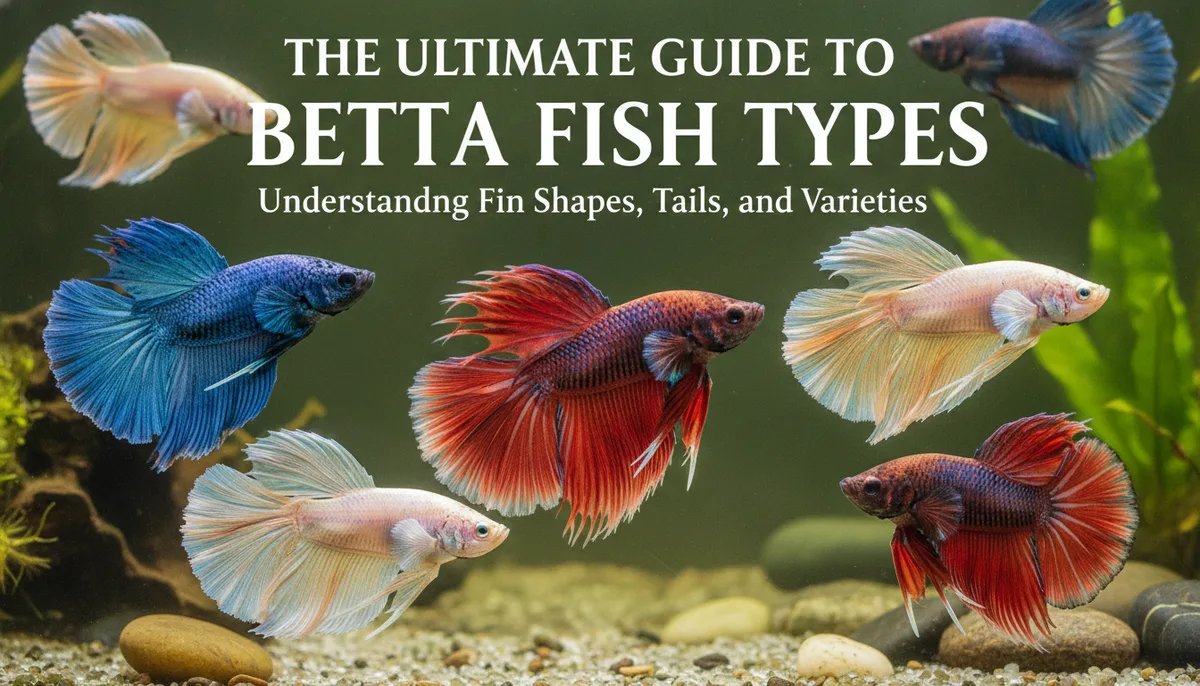
The Ultimate Guide to Betta Fish Types: Understanding Fin Shapes, Tails, and Varieties
Walking into a local fish store and seeing the rows of colorful jars can be an overwhelming experience for a first-time hobbyist. While every one of those vibrant fish is technically a Betta splendens, the sheer variety of fin shapes, tail types, and body sizes is staggering. These are not just "natural" variations; they are the result of decades of meticulous selective breeding and hybridization.
To understand what you are looking at, it helps to look toward the International Betta Congress (IBC). This worldwide organization sets the "gold standard" for betta exhibitions across six continents. They categorize these fish based on specific physical traits, ensuring that the hobby maintains a high level of quality and consistency. Whether you are looking for a show-quality specimen or a hardy pet, understanding these classifications is the first step toward becoming a successful "Tank Keeper."
Sexing Your Betta: Identifying Males vs. Females
Before diving into the specific tail types, it is crucial to understand the fundamental differences between males and females. This distinction dictates not only the aesthetic of your tank but also the care requirements and social dynamics of the fish.
Characteristics of Male Bettas
The majority of bettas sold in the aquarium trade are males. They are the "showstoppers" of the species, bred specifically for their long, flowing finnage and intense coloration. Beyond their looks, males are defined by their behavior. They are highly territorial and will exhibit an "aggressive response"—often called flaring—when they see another male or even their own reflection.
Characteristics of Female Bettas
Female bettas are often overlooked, but they possess a subtle beauty of their own. Physically, they are shorter in both body length and fin size. One of the easiest ways to identify a female is by her rounded abdomen, which may become noticeably swollen when she is carrying eggs. While they are generally less aggressive than males, they are not entirely docile; they still possess the spirited personality that bettas are known for.
The Halfmoon Betta: The Gold Standard of Elegance
Perhaps the most iconic variety in the modern hobby is the Halfmoon Betta. This variety is the epitome of the "curtain-like" fins that many people associate with the species.
The name "Halfmoon" refers specifically to the caudal fin (the tail). When the fish flares, the tail should spread to a full 180 degrees, creating a perfect capital "D" shape. This symmetry is what judges look for in competitions. However, the elegance doesn't stop at the tail. A true Halfmoon should also have an extended dorsal fin (on the back) and anal fin (on the underside) that overlap with the tail, creating a seamless silhouette of color.
Because of their massive finnage, Halfmoons are not the fastest swimmers. They can easily become exhausted in high-flow environments. If you are planning to showcase a Halfmoon, consider using a Best Rimless Aquariums for a Modern Home Aesthetic to provide a clear, unobstructed view of their spectacular displays, while ensuring your filtration doesn't create a whirlpool effect.
Low-flow sponge filter for betta tanks
The Crowntail: A Masterpiece of Texture
If the Halfmoon is defined by its volume, the Crowntail is defined by its texture. First developed in Indonesia, the Crowntail has a distinctive, prickly appearance that sets it apart from every other variety.
This look is achieved through a reduction in the webbing between the fin rays. In a high-quality Crowntail, the rays extend far beyond the webbing, creating "spikes." There are several sub-categories of these extensions:
- Single Ray: Each ray extends individually.
- Double Ray: The rays split into two points at the ends.
- Cross Ray: The rays actually cross over one another, creating a complex, woven look.
This "crown" effect applies to the dorsal, anal, and caudal fins, giving the fish a rugged, royal appearance.
The Plakat and the Giant: Returning to the Roots
Not every betta enthusiast wants long, flowing fins. For those who prefer a fish that looks more like its wild ancestors, the Plakat is the variety of choice.
The Plakat Betta
Plakats were historically bred for fighting sport, which required them to be fast, agile, and powerful. As a result, they have much shorter fins than Halfmoons or Crowntails. This short finnage allows them to zoom through the water with ease.
Hobbyists often note that Plakats tend to be more active and sometimes more aggressive than their long-finned cousins. Their anatomy is also slightly different; the anal fin is less rectangular and more pointed toward the tail, and they often sport longer ventral fins (the two fins hanging under the chin).
The Giant Betta
The Giant Betta is a fascinating variation of the Plakat. Unlike standard bettas that stop growing once they reach adulthood, Giants continue to grow throughout their lives. To earn the "Giant" classification from the IBC, a male must have a body length of at least 2.5 inches (6.35 cm). They are not just longer; they are significantly bulkier and heftier than standard bettas, requiring more space and more food to maintain their massive frames.
High-protein betta pellets for Giant Bettas
The Doubletail: A Unique Genetic Variation
The Doubletail is a striking variety that possesses a unique genetic trait: it has two separate caudal fins. These tails connect directly to the fish's body, making it look as though a single tail has been split into two distinct lobes.
Because the fish needs a wider physical base to support two tails, Doubletails have a distinct body shape. They are often shorter and "stouter" than other varieties. This wider body also results in a much broader dorsal fin, which often mirrors the size and shape of the anal fin. The Doubletail trait can be combined with other forms, leading to Halfmoon Doubletails or even Plakat Doubletails.
The Veiltail: The Classic Companion
The Veiltail is the variety most people remember from their childhood. It has been a staple of the aquarium trade for decades. While it lacks the 180-degree spread of the Halfmoon, it features a long, graceful tail that droops downward like a teardrop.
Veiltails are often the most affordable and readily available bettas in pet stores. While they may not be the stars of IBC shows, they are hardy, colorful, and an excellent choice for a beginner's first tank. To truly see the vibrant reds, blues, and iridescent greens of a Veiltail, proper lighting is essential. You can find more information on how to highlight your fish's colors in our guide on Best LED Aquarium Lighting for Planted Tanks: Budget vs. Professional Grade.
Summary of Betta Types and Traits
| Betta Type | Distinguishing Feature | Best Tank Setup |
|---|---|---|
| Halfmoon | 180-degree "D" shaped tail | Low flow, gentle filtration |
| Crowntail | Reduced webbing, spikey rays | Soft decor (to prevent fin tearing) |
| Plakat | Short, agile fins; "wild" look | Larger tanks for high activity |
| Giant | Body length over 2.5 inches | 10+ gallon tanks, high protein diet |
| Doubletail | Two distinct tail lobes | Broad-leafed plants for resting |
| Veiltail | Long, drooping "teardrop" tail | Standard community or solo tanks |
Choosing the Right Betta for Your Lifestyle
When selecting a betta, it is important to consider how much time you want to spend on maintenance. Long-finned varieties like the Halfmoon and Crowntail are more susceptible to "fin rot" and physical damage from sharp decorations. They require pristine water quality and very gentle filtration.
If you are looking for a more "interactive" and hardy pet, a Plakat or a Giant might be the better choice. Their shorter fins make them less prone to injury and allow them to explore their environment more vigorously. Regardless of which type you choose, remember that bettas are intelligent, sentient creatures that thrive in heated, filtered environments—not unheated bowls.
If you are planning to bring home a rare variety from a distant breeder or a show, make sure you are prepared for the journey by reading How to Fly with Live Fish: The Ultimate Guide to Bringing Your "Holy Grail" Home.
By understanding the standards set by the IBC and the unique needs of each variety, you can ensure that your new betta doesn't just survive, but truly thrives as the centerpiece of your aquarium.