
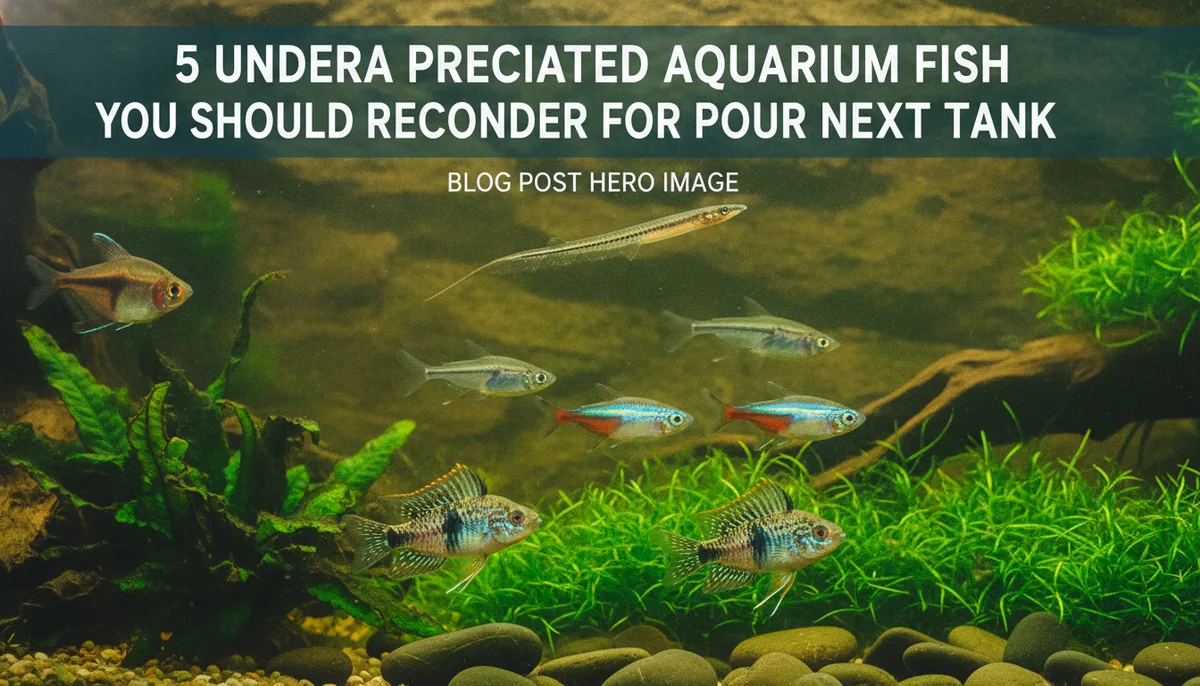
5 Underappreciated Aquarium Fish You Should Reconsider for Your Next Tank
In the modern aquarium hobby, there is a constant drive toward the "new" and the "rare." Hobbyists often spend hundreds of dollars on newly discovered species from remote river basins, chasing the prestige of keeping something unique. In this pursuit, many incredible species have been pushed to the sidelines. These are the fish often labeled as "beginner fish" or "feeder fish"—species that are so common they have become invisible.
However, many of these underappreciated species are popular for a reason: they are incredibly hardy, full of personality, and often more beautiful than the high-priced rarities when given the proper care. If you are looking to start a new project, it may be time to look back at the classics. Here are our top 5 underappreciated fish that deserve a second look.
1. The Common Goldfish (Carassius auratus)
The common goldfish is perhaps the most misunderstood animal in the entire hobby. Frequently given away as carnival prizes or sold for pennies as "feeders," most people view them as disposable pets that live for a few months in a small bowl. The reality is far more impressive.
Why They Are Underappreciated
Common goldfish are the "monster fish" of the beginner world. Unlike fancy goldfish (like orandas or ranchus) which have egg-shaped bodies and delicate double tails, the common goldfish has a sleek, torpedo-shaped body and a powerful single tail. This makes them incredibly fast and athletic swimmers. They come in a stunning array of colors, including vibrant orange, deep red, white, yellow, and even olive-brown.
Real-World Care and Longevity
Because they are so inexpensive, many keepers don't realize that common goldfish can grow up to 12 inches long and live between 10–40 years. They are extremely robust and can handle a wide range of water parameters, with a pH tolerance of 6.0–8.0.
As they grow, they will eventually require a tank at least 4 feet long or, ideally, an outdoor pond. They are cool-water fish, thriving in temperatures from 50–78°F (10–26°C). One of their best "utilitarian" traits is their appetite for floating plants; they are excellent "vacuum cleaners" for removing excess duckweed from a system.
2. White Cloud Mountain Minnow (Tanichthys albonubes)
If the massive size of a goldfish is a deterrent, the White Cloud Mountain Minnow is the perfect alternative for a cool-water setup. Once known as the "Poor Man's Neon Tetra," this species is often overlooked in favor of more colorful tropical tetras, yet it offers a subtle beauty and hardiness that few other fish can match.
The Beauty of the "Cloud"
Originally from the mountain streams of China and Vietnam, these 1.5-inch (4 cm) fish feature a shimmering gray-brown body accented by a bright white horizontal stripe and vivid red fins. They also come in "24k Gold" and long-fin varieties that look spectacular in a well-lit aquarium.
Tank Setup and Breeding
White Clouds are schooling fish and should be kept in groups of at least six. They are incredibly easy to care for, tolerating a pH of 6.5–8.5 and temperatures as low as 65°F (18°C). Because they don't require a heater in most homes, they are ideal for nano tanks. While these fish are hardy, displaying them in Best Rimless Aquariums for a Modern Home Aesthetic can elevate their look from "pet store basic" to "living art."
They are also one of the easiest egg-scattering species to breed. If you provide them with a dense clump of moss, you will often find tiny fry darting around the surface without any extra effort on your part.
3. Paradise Fish (Macropodus opercularis)
The Paradise Fish holds a special place in history as one of the first ornamental fish ever kept in the West, predating the popularity of the Betta splendens. Despite their stunning blue and red-orange tiger striping and elegant lyre-shaped tails, they have fallen out of favor as hobbyists moved toward more "exotic" gouramis.
A Robust Labyrinth Fish
The Paradise Fish is a labyrinth fish, meaning it can breathe atmospheric air. This makes them exceptionally hardy in low-oxygen environments. Growing to about 2.5–3 inches (6–8 cm), they are an undemanding centerpiece fish that can handle a massive temperature range of 60–80°F (16–27°C).
Temperament and Tank Mates
It is important to note that Paradise Fish are semi-aggressive, much like their cousins, the Bettas. They should be kept with fast-swimming or "unflappable" tank mates. They are excellent for unheated 20-gallon tanks where they can act as the star of the show. Their personality is bold; they will often come to the front of the glass to "greet" their owners, making them much more interactive than your average schooling fish.
4. The Rosy Barb (Pethia conchonius)
The Rosy Barb is a classic example of a fish that looks "okay" in a pet store feeder tank but looks "incredible" once settled into a home aquarium. Often sold as small, silvery juveniles, they transform into deep, shimmering metallic copper and rose-colored adults.
High Energy and Hardiness
Rosy Barbs are one of the hardiest barbs in the hobby. They are active, boisterous swimmers that bring constant movement to the middle and upper layers of the tank. They can grow up to 6 inches in some cases, though 4 inches is more common in home aquaria. Like the other fish on this list, they are surprisingly tolerant of cooler temperatures, making them great companions for common goldfish in larger setups.
Feeding and Maintenance
These are not picky eaters. They will readily accept flakes, pellets, and frozen foods. If you are looking for bottom dwellers to accompany your Rosy Barbs or White Clouds, check out The Best Small Catfish for Community Aquariums: A Complete Guide to Corys, Otos, and Beyond for compatible species that share their hardy nature.
5. Cherry Barb (Puntius titteya)
While many hobbyists chase the latest "Designer" Tetra, the humble Cherry Barb remains one of the most reliable and visually striking fish for a community tank. They are often overlooked because the females are a modest tan color, but the males—especially when competing for the attention of females—turn a deep, glowing cherry red.
The Perfect Community Resident
Unlike some of their nippier cousins (like the Tiger Barb), Cherry Barbs are incredibly peaceful. They stay small (about 2 inches) and are perfect for planted tanks. They are active but not hyperactive, providing a splash of red that rivals the most expensive Discus or high-end Rasboras.
Enhancing Their Color
To see the best colors from Cherry Barbs, keep them in a tank with plenty of live plants and a dark substrate. The contrast of the deep red against green foliage is one of the most classic looks in the hobby. If you notice your plants are struggling to provide that lush backdrop, you might be dealing with nutrient issues. For example, why your aquarium plants have pinholes is often a sign of potassium deficiency, which can be easily fixed to ensure your Cherry Barbs have a beautiful home.
Why "Common" Fish Make Better Pets
The term "beginner fish" is often used as a slight, but it really signifies a species' ability to adapt and thrive. For the hobbyist, these underappreciated fish offer several advantages:
- Resilience: These fish can handle the minor fluctuations in water quality that might kill more sensitive, expensive species.
- Cost-Effectiveness: You can create a stunning, high-impact display for a fraction of the cost of a "rare" species tank.
- Availability: You don't have to wait for a special shipment or pay high shipping fees; these gems are likely waiting at your local fish store right now.
- Longevity: Many of these species, particularly the goldfish and paradise fish, have lifespans that allow you to grow with the animal over many years.
Creating a High-End Look with Common Fish
The secret to making these fish look "pro" is the environment. A common goldfish in a bare tank looks like a feeder fish. That same goldfish in a 75-gallon tank with large river stones, driftwood, and robust plants like Anubias looks like a high-end "monster" display. Similarly, a school of 20 White Cloud Minnows in a high-tech planted tank looks far more impressive than a handful of expensive, stressed-out rare tetras.
When selecting your next inhabitants, don't let the price tag or the "beginner" label fool you. The Common Goldfish, White Cloud, Paradise Fish, and Barbs offer beauty, personality, and a connection to the history of the aquarium hobby that few other fish can provide.