
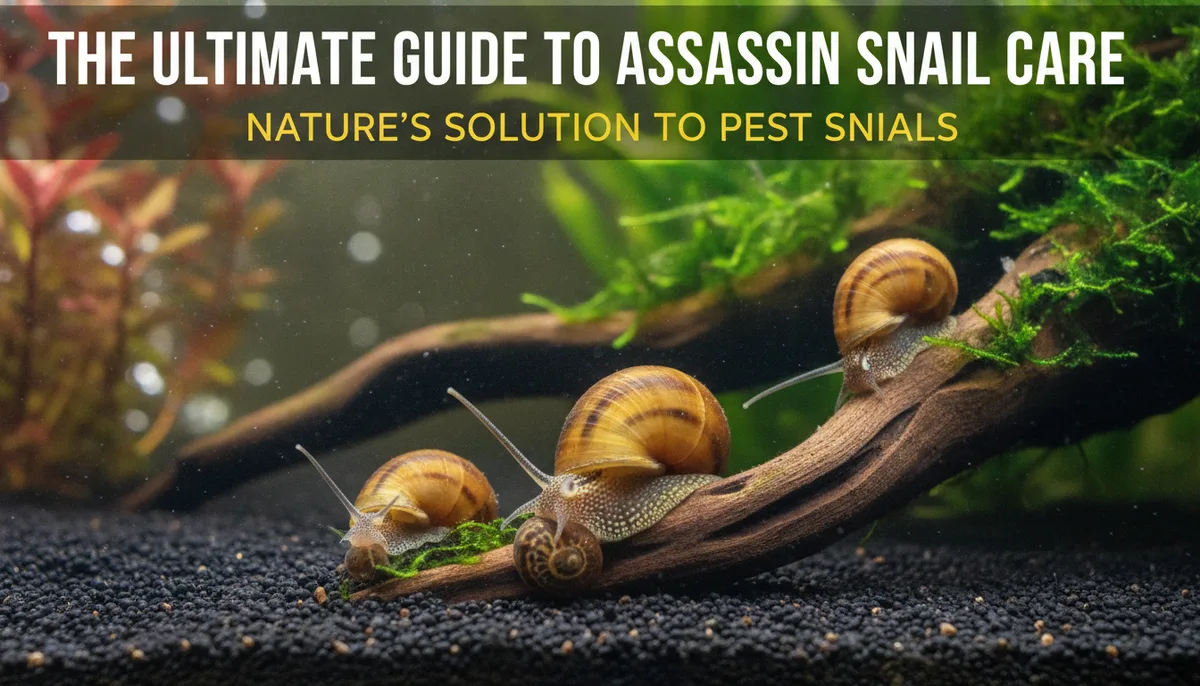
The Ultimate Guide to Assassin Snail Care: Nature’s Solution to Pest Snails
For many freshwater hobbyists, the "snail explosion" is a rite of passage. You bring home a new bunch of Luwigia or Java Fern, and within weeks, your glass is covered in tiny, translucent specks. Whether it’s the prolific breeding of bladder snails, the hardy ramshorn, or the substrate-dwelling Malaysian trumpet snail (MTS), these "pests" can quickly overwhelm the aesthetics of a carefully curated aquascape.
While chemical treatments exist, they often carry the risk of crashing your biological filter or harming sensitive inhabitants like ornamental shrimp. This is where the *Assassin Snail (Anentome helena)* steps in. Often referred to as the "bumblebee snail" due to its striking yellow and dark brown stripes, this tiny predator offers a biological solution to snail overpopulation.
In this guide, we will dive deep into the biology, care requirements, and breeding strategies for the assassin snail, ensuring you can maintain a healthy population that keeps your tank in perfect balance.
Understanding the Assassin Snail: Anatomy and Behavior
Native to Southeast Asia—specifically Thailand, Malaysia, and Sumatra—the assassin snail is a unique gastropod that has evolved specifically for a carnivorous lifestyle. Unlike the common garden variety snails that rasp away at algae or decaying plant matter, Anentome helena is a hunter.
The Iconic Appearance
The most striking feature of the assassin snail is its shell. It grows to approximately 1 inch (2.5 cm) in length and features a distinct conical, spiral shape with a ribbed texture. The coloration is high-contrast, featuring alternating bands of chocolate brown and vibrant yellow.
The Siphon: A Hunter’s Tool
If you observe an assassin snail moving across your substrate, you will notice a long, trunk-like tube extending forward. This is the siphon. The snail uses this organ to draw water over its gills, but it serves a dual purpose as a sensory organ. By "tasting" the water, the snail can detect the chemical signatures of its prey from a distance.
Like the Malaysian trumpet snail, assassins are fond of burrowing. They will often stay submerged in the sand with only their siphon protruding like a snorkel. This allows them to remain hidden from potential predators while waiting for a wandering pest snail to pass by.
Setting Up the Ideal Assassin Snail Habitat
While assassin snails are remarkably hardy, providing them with the correct environment will ensure they live their full 2-to-3-year lifespan and remain active hunters.
Water Parameters and Chemistry
Because they are native to tropical Southeast Asian waters, they prefer stable, warm conditions.
- Temperature: 70–80°F (21–27°C)
- pH: 7.2–8.0
- Hardness: Moderate to Hard (GH 8–15)
The pH and hardness are particularly critical. Snails require calcium and other minerals to maintain the structural integrity of their shells. If kept in acidic or very soft water, the shell will begin to dissolve, resulting in white pits, cracks, or a thinning "see-through" appearance. If your tap water is naturally soft, you may need to use API GH & KH Test Kit to monitor levels and supplement accordingly.
Substrate and Tank Decor
A soft substrate is highly recommended. Because these snails enjoy burrowing, a fine sand or small-grained gravel is ideal. Sharp, large-chunk gravel can make it difficult for them to submerge and may even damage their soft bodies.
When designing your tank, consider a high-quality aesthetic. These snails look particularly stunning in a "nature aquarium" style setup. If you are looking for a high-end display, check out our guide on the Best Rimless Aquariums for a Modern Home Aesthetic to see how a clean tank design can highlight the unique patterns of these snails.
The Carnivore Diet: What Do Assassin Snails Eat?
The primary reason hobbyists seek out Anentome helena is their appetite for other snails. They are remarkably efficient at clearing out infestations of bladder snails and ramshorns.
Hunting Mechanics
When an assassin snail locates its prey, it uses its foot to grip the victim's shell. It then extends its proboscis into the opening of the prey's shell and consumes the soft tissue inside. Because they are slow-moving, they don't "chase" in the traditional sense; they are ambush predators and opportunistic scavengers.
Supplemental Feeding
A common question is: What happens when the pest snails are gone? Assassin snails will not starve if pest snails are eradicated, provided you offer high-protein alternatives. They will happily accept:
- Frozen bloodworms or brine shrimp
- Sinking carnivore pellets
- Fish flakes that reach the bottom
- Repashy Bottom Scratcher Gel Food
It is important to remember that they are not algae eaters. They will ignore the green film on your glass and won't touch your prized aquatic plants. In fact, if you notice holes in your plants, it isn't the snails; it's likely a nutrient issue. You might want to read our guide on Why Your Aquarium Plants Have Pinholes: The Ultimate Guide to Potassium Deficiency to troubleshoot plant health.
Compatibility and Tank Mates
Choosing the right neighbors for your assassin snails is a two-way street: you must protect the snails from predators and protect your other inhabitants from the snails.
Safe Tank Mates
Assassin snails are generally peaceful toward anything that isn't a snail. They are excellent additions to community tanks featuring:
- Peaceful Fish: Tetras, Rasboras, and Guppies.
- Bottom Dwellers: Most Corydoras and Otocinclus are perfectly safe. For more ideas on small bottom-dwellers, see our list of The Best Small Catfish for Community Aquariums.
- Shrimp: Adult Cherry or Amano shrimp are usually too fast for an assassin snail to catch. However, be cautious with very young or molting shrimp.
Animals to Avoid
You should avoid keeping assassin snails with known "snail-eaters" such as:
- Pufferfish (Pea puffers, Figure 8 puffers)
- Large Loaches (Clown loaches, Yoyo loaches)
- Large, aggressive Cichlids
Furthermore, if you have "ornamental" snails like Nerite snails, Mystery snails, or Rabbit snails, be warned: a group of assassin snails can and will gang up on a much larger snail to take it down. If you value your Nerites, do not introduce assassins to the same tank.
How to Breed Assassin Snails for Profit
Unlike many of the pest snails they hunt, assassin snails are not hermaphrodites. They have distinct males and females, though telling them apart is nearly impossible for the human eye.
The Breeding Process
To successfully breed them, it is best to start with a group of six or more to ensure a high probability of having both sexes. When conditions are right—plenty of food and clean, warm water—they will mate.
The female lays eggs individually in small, translucent, square-shaped capsules. These capsules have distinct "pointy" corners and are usually attached to hard surfaces like driftwood, rocks, or even the silicone seams of the aquarium.
Growth and Population Control
One of the benefits of using assassin snails for pest control is that they breed very slowly. While a single bladder snail can turn into a hundred in a month, an assassin snail only lays one egg per capsule, and those eggs take several weeks to hatch. The juveniles will often disappear into the substrate for several months, feeding on micro-fauna and tiny scraps until they are large enough to hunt small snails.
Because they are highly sought after by other hobbyists, you can often trade your "home-grown" assassins to local fish stores for store credit or sell them online.
Ensuring Long-Term Health: Minerals and Shell Care
The most common cause of death for assassin snails, aside from predation or starvation, is poor shell health. A snail's shell is its primary defense and a vital part of its anatomy.
Mineral Supplementation
If you notice the vibrant yellow bands on your snails are turning white or becoming brittle, your water likely lacks calcium. To fix this, you can add Seachem Equilibrium Mineral Supplement to the water or place a bag of crushed coral in your filter. This slowly leaches calcium and carbonates into the water, raising the GH and buffering the pH.
Diet for Shell Strength
Feeding mineral-enriched foods can also help. Foods designed for shrimp and snails often contain concentrated calcium which the snail can ingest directly to aid in shell production.
Conclusion: Is the Assassin Snail Right for You?
The assassin snail is more than just a utility animal; it is a fascinating, beautiful addition to the freshwater aquarium. It provides an "ecosystem service" by managing pest populations while remaining respectful of your plants and fish.
By maintaining a pH above 7.2, providing a sandy substrate for burrowing, and ensuring they have a protein-rich diet, you can enjoy these "bumblebee" hunters for years to come. Whether you are looking to solve a snail problem or simply want to observe the unique hunting behaviors of Anentome helena, they are a rewarding species for any dedicated tank keeper.