
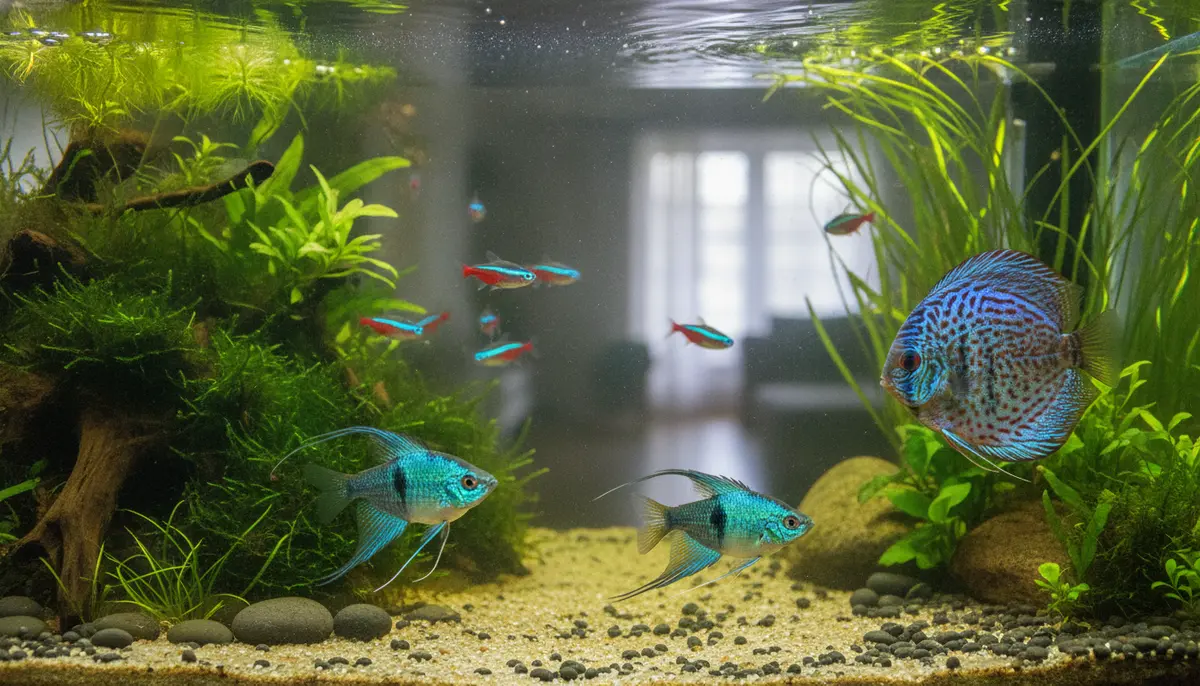
Top 3 Spectacular Species for Soft Water Aquariums: A Guide to Low GH Success
For many beginners in the fishkeeping hobby, the first instinct is to adjust the water to fit the fish they saw at the local pet store. We spend hundreds of dollars on pH buffers, "water softeners," and mineral additives, often fighting a losing battle against the natural chemistry of our tap water. However, the most successful aquarists follow a different philosophy: work with the water you have.
If you have tested your tap water using a multi-test strip and found a General Hardness (GH) of 4 degrees (75 ppm) or lower, you have "soft" water. This means your water is naturally low in dissolved minerals like calcium and magnesium. While this can be a challenge for livebearers like Guppies or Mollies, it is a massive advantage for keeping some of the most beautiful and sought-after species in the hobby.
Rather than fighting your chemistry, you can lean into it. South American cichlids and specialized freshwater shrimp thrive in these mineral-light environments. Here is a deep dive into three spectacular species that will turn your soft water "problem" into a world-class display.
1. The Majestic Discus (Symphysodon Genus)
Often referred to as the "King of the Aquarium," the Discus is perhaps the most iconic soft water fish in existence. Originating from the Amazon River basin, these cichlids are known for their stunning lateral compression—growing into a shape resembling a 5- to 7-inch saucer plate—and their incredible array of colors.
Color Morphs and Varieties
Through years of dedicated linebreeding, the hobby now enjoys a staggering variety of Discus. You can find "Blue Diamonds" with solid, iridescent scales, "Pigeon Bloods" with intricate speckling, or "Checkerboards" and "Snakeskins" that look like hand-painted art. Because they are a significant investment, many keepers choose to focus a large tank entirely around a single group of these fish.
Social Dynamics and Tank Size
Discus are generally peaceful, but they are still cichlids. They possess a social hierarchy and can become territorial, especially during spawning. To manage aggression, it is best to keep them in a group of at least six individuals. This spreads out any "pecking" behavior. For a group of this size, a 75-gallon aquarium is the recommended minimum.
Water Parameters and Temperature
While their wild ancestors demand very low pH, captive-bred Discus are more adaptable. If you aren't planning on breeding them, they can thrive in a pH as high as 6.8–7.6. The "secret sauce" for Discus health is actually heat. They require temperatures between 84–86°F (29–30°C). This high temperature boosts their metabolism and helps ward off parasites.
However, keeping fish at these temperatures requires careful monitoring of their health. Discus are particularly susceptible to certain ailments if water quality dips. For more on maintaining health in sensitive species, you may want to read our guide on Understanding Hole-in-the-Head Disease: Causes, Treatment, and Long-Term Prevention.
2. Crystal and Bee Shrimp (Caridina cantonensis)
If you prefer a smaller-scale ecosystem, soft water is a prerequisite for the high-end world of Caridina shrimp. Unlike the more common Cherry Shrimp (Neocaridina), Bee Shrimp and Crystal Red Shrimp require very specific, soft water conditions to survive and molt properly.
Varieties and Aesthetics
These shrimp have been hybridized into breathtaking patterns, including the "Blue Bolt," "Galaxy Pinto," and the classic "Crystal Red." They stay small, usually around 1.5 inches, making them perfect for "nano" aquariums of 10 to 20 gallons.
Specialized Care Requirements
Serious shrimp keepers often use RODI (reverse osmosis deionized) water and then add back specific minerals to reach a GH of 4–7 degrees while keeping the KH (carbonate hardness) near zero. To maintain this, an "active" substrate is used. These substrates are typically soil-based and act as a buffer to keep the pH below 6.8.
Diet and Molting
Because soft water lacks the heavy mineral content found in "hard" water, you must provide minerals through their diet. While they are excellent scavengers, feeding specialized shrimp foods ensures they have the calcium necessary for a healthy molt. Without these targeted nutrients, shrimp can suffer from the "white ring of death," where they fail to break out of their old shell.
3. The Ram Cichlid (Mikrogeophagus ramirezi)
For those who want the personality and color of a Discus but in a much smaller package, the Ram Cichlid (or German Blue Ram) is the perfect candidate. These dwarf cichlids are famous for their spiky dorsal fins and vibrant blue, yellow, and red coloration.
Varieties and Behavior
Rams come in several popular strains, including the Electric Blue Ram, the Gold Ram, and the Black Ram. They are full of personality and will often "beg" for food at the front of the glass. While they are small enough for a 10-gallon tank for a breeding pair, a 20-gallon long aquarium provides a better footprint for a community setting.
Environmental Needs
Like the Discus, Rams prefer the warmer side of life, thriving at 84–86°F. They are sensitive to nitrates, so regular water changes are a must. They also appreciate plenty of visual breaks—using driftwood, rocks, and caves to establish territories.
Rams like to "sift" through the substrate for food, so a sandy bottom is often preferred. If you are keeping them in a planted tank, be aware that they may occasionally uproot delicate foreground plants. It is often safer to stick with hardy species like Java Fern or Anubias that can be attached to hardscape.
Designing the Soft Water Landscape
Maintaining a soft water tank often goes hand-in-hand with keeping a "planted" tank. Many aquatic plants thrive in slightly acidic, soft water. However, because soft water is naturally low in minerals, you may notice certain nutrient deficiencies more quickly than you would in hard water.
One common issue in soft water planted tanks is a lack of potassium. If you notice your leaves developing small, yellow-rimmed holes, your plants are likely struggling. To diagnose this, check out our article on Why Your Aquarium Plants Have Pinholes: The Ultimate Guide to Potassium Deficiency.
Choosing Tank Mates
When building a community around Discus or Rams, you need companions that can handle the high heat and soft water. Small, schooling tetras like Cardinals or Rummynose are classic choices. If you are looking for bottom-dwellers to help keep the substrate clean, certain species of Corydoras (like Corydoras sterbai) are uniquely suited to the higher temperatures these cichlids require.
For a deeper look at compatible bottom-dwellers, see our guide on The Best Small Catfish for Community Aquariums: A Complete Guide to Corys, Otos, and Beyond.
Conclusion: Embracing Your Ecosystem
Success in fishkeeping is rarely about forcing nature to change; it’s about finding the beauty in the conditions you already have. Soft water provides a unique opportunity to keep some of the most vibrant, intelligent, and rewarding species in the freshwater world.
Whether you choose the slow, majestic movement of a Discus shoal, the frantic and colorful world of Bee Shrimp, or the feisty personality of a pair of Ram Cichlids, your soft water aquarium can become a thriving, low-stress environment. By matching your inhabitants to your GH and pH, you reduce the need for chemical interventions and create a more stable, healthy home for your aquatic pets.