
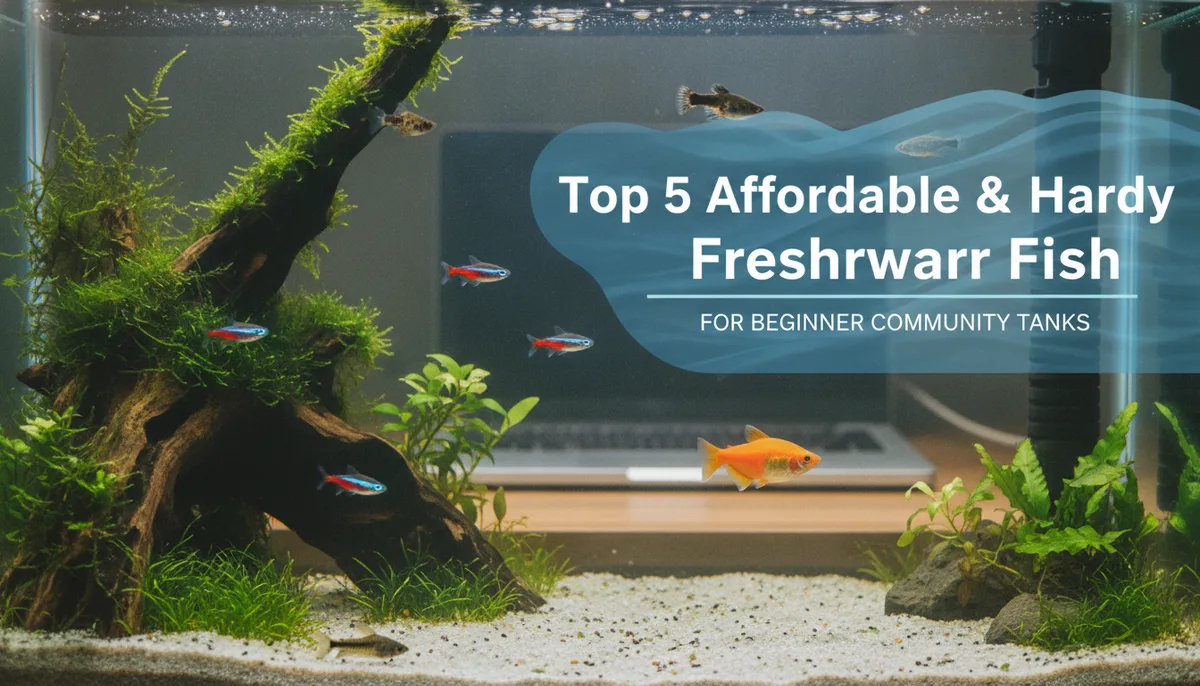
Top 5 Affordable and Hardy Freshwater Fish for Beginner Community Tanks
The Reality of Aquarium Budgeting: Why "Cheap" Fish Matter
Contrary to popular belief, aquarium fish are not necessarily the cheapest animals at the pet store. By the time you invest in a high-quality tank, a reliable heater, a filtration system, and aesthetic decorations, you may find that your remaining budget for the actual inhabitants is smaller than expected. This financial bottleneck often leads beginners to make the mistake of buying the least expensive fish available without considering their health or specialized needs.
The last thing any hobbyist wants is to bring home a fragile animal that is difficult to care for or won’t last more than a few weeks. A "cheap" fish becomes very expensive if you have to replace it every month. To help you maximize your investment, we have curated a list of the top five freshwater fish that are not only affordable but also incredibly hardy and safe for community environments. These species are selected because they either boast long lifespans or reproduce easily, ensuring your tank remains full of life without requiring constant trips back to the store.
1. Sunset Variatus Platy (Xiphophorus variatus)
The Sunset Variatus Platy is a staple in the hobby for a reason. Originally found in the plant-filled waterways of Mexico, this species has proven itself to be one of the most robust livebearers available. They are a personal favorite for many veteran keepers because of their "bulletproof" nature and striking aesthetics.
Appearance and Personality
The "Sunset" variety is particularly famous for its stunning ombre coloration. They typically grow to about 2–3 inches (5–8 cm) and feature a bright yellow body that gradually transitions into a deep red-orange tail. When kept in a lush environment, their colors pop brilliantly. To truly see these colors shine, consider how your environment impacts visibility; our guide on the Best LED Aquarium Lighting for Planted Tanks: Budget vs. Professional Grade explains how different spectrums can enhance the reds and yellows of fish like the Platy.
Care and Breeding
Platies are incredibly easy to breed. If you start with one male and two to three females in a 15- to 20-gallon aquarium, you will likely see fry within a month. This makes them a "one-time purchase" that can populate an entire tank over time.
- Water Parameters: They prefer harder water (pH 7.0–8.0) and a GH of 10° (180 ppm) or higher.
- Temperature: They thrive in cooler water (65–78°F), meaning you can often skip the heater if your home stays consistently warm.
- Diet: They are opportunistic eaters that will even graze on algae. A balanced diet of community flakes and mineral-rich pellets is ideal.
2. Black Neon Tetra (Hyphessobrycon herbertaxelrodi)
While the standard Neon Tetra is world-famous, the Black Neon Tetra is often the superior choice for those prioritizing hardiness. They are more resilient to common fish diseases and tend to have a more confident, active personality than their blue-and-red cousins.
A Sophisticated Aesthetic
Growing to about 1–1.5 inches, the Black Neon Tetra features a pearly white horizontal stripe set against a bold black band. Perhaps their most striking feature is the bright red "eyeshadow" above their pupils. In a school of six or more, they create a sophisticated, shimmering effect as they move through the upper half of the water column.
Habitat Requirements
Native to the Paraguay River basin in Brazil, these fish are adaptable. While they technically prefer slightly acidic water, they thrive in pH levels ranging from 5.0 to 8.0.
- Tank Size: A group of six can live in a 10-gallon tank, though a 20-gallon long is better for observing their natural schooling behavior.
- Tank Mates: They are peaceful enough to live with dwarf cichlids, hatchetfish, and even larger species like angelfish, as their deeper body shape makes them less likely to be eaten.
- Feeding: They prefer floating or slowly sinking foods. Look for nano pellets or freeze-dried daphnia to keep them healthy.
3. Kuhli Loach (Pangio kuhlii)
If you are looking for an "oddball" fish that offers incredible value, the Kuhli Loach is unbeatable. These eel-like creatures often cost only a few dollars but can live for 10 years or more, making them one of the best long-term investments in the hobby.
Behavior and Appearance
Kuhli Loaches grow to about 3–4 inches and have a distinctive yellow-tan body with dark brown vertical bands. They are the ultimate "clean-up crew" for the bottom of the tank, using their delicate barbels to sift through substrate for leftover food. While they are primarily nocturnal, they become much more active and visible during the day if kept in groups of three or more.
Feeding and Maintenance
Because they are bottom dwellers, you must ensure food actually reaches them. They are predominantly carnivorous and thrive on sinking wafers and frozen bloodworms. For those interested in other bottom-dwelling species that complement the Kuhli Loach, check out The Best Small Catfish for Community Aquariums: A Complete Guide to Corys, Otos, and Beyond.
4. White Cloud Mountain Minnow (Tanichthys albonubes)
Often referred to as the "poor man's neon tetra," the White Cloud Mountain Minnow is a gem that is frequently overlooked. These fish are incredibly inexpensive and are perhaps the hardiest species on this list regarding temperature fluctuations.
The Cold-Water Champion
White Clouds do not require a heater. In fact, they prefer temperatures between 60°F and 72°F. This makes them perfect for "low-tech" setups where you want to minimize electrical equipment. They have a beautiful silver-green body with a glowing pinkish-red line and red fins.
Why They Are Great for Budgets
Beyond their low purchase price, their ability to thrive in unheated tanks saves you money on your monthly energy bill and the initial cost of a heater. They are also very easy to breed in a species-only tank, as they generally do not eat their own eggs or fry as aggressively as other species.
5. Zebra Danio (Danio rerio)
No list of hardy, affordable fish is complete without the Zebra Danio. These fish are the marathon runners of the aquarium world—constantly in motion and incredibly difficult to kill, even for a total novice.
Activity and Visual Appeal
With their horizontal "racing stripes," Zebra Danios add a sense of energy to the top layer of the aquarium. They are social schooling fish that should be kept in groups of at least five. Their constant activity can even help "dither" more shy fish, encouraging them to come out of hiding.
Resilience
Zebra Danios can tolerate a massive range of water conditions. They are often used to "cycle" new tanks (though we recommend fish-less cycling for safety), because they can withstand minor spikes in ammonia or nitrite that would be fatal to other species. They are also compatible with almost any peaceful community fish and are not picky eaters.
Maximizing Your Investment: Care Tips for Long-Lasting Fish
Choosing hardy fish is only the first step. To ensure you aren't wasting money on replacements, you must maintain a healthy environment. Even the hardiest Platy or Danio can succumb to poor water quality over time.
The Importance of Plants
Many of the fish on this list, particularly the Black Neon Tetra and the Sunset Variatus Platy, thrive in planted environments. Plants provide hiding spots, which reduces stress and boosts the fish's immune systems. However, keeping plants healthy requires its own set of knowledge. If you notice your aquarium plants struggling, it could impact your fish's health. For instance, understanding Why Your Aquarium Plants Have Pinholes: The Ultimate Guide to Potassium Deficiency can help you maintain a lush forest that keeps your budget-friendly fish happy for years.
Consistency Over Perfection
Hardy fish don't necessarily need "perfect" soft water or a specific "blackwater" pH. What they need is consistency. Avoid making massive, sudden changes to your water chemistry. Regular, small water changes (20-30% weekly) are much better than one massive 80% change once a month.
Quality Nutrition
While these fish are affordable, don't skimp on their food. High-quality nutrition prevents disease, which saves you money on medications and replacement fish in the long run. Rotate between a high-quality flake and occasional frozen or freeze-dried treats to ensure they get a full profile of vitamins and minerals.
aquarium water testing kit
By focusing on these five species—the Sunset Variatus Platy, Black Neon Tetra, Kuhli Loach, White Cloud Mountain Minnow, and Zebra Danio—you can build a vibrant, active, and resilient aquarium that fits your budget and stands the test of time.