
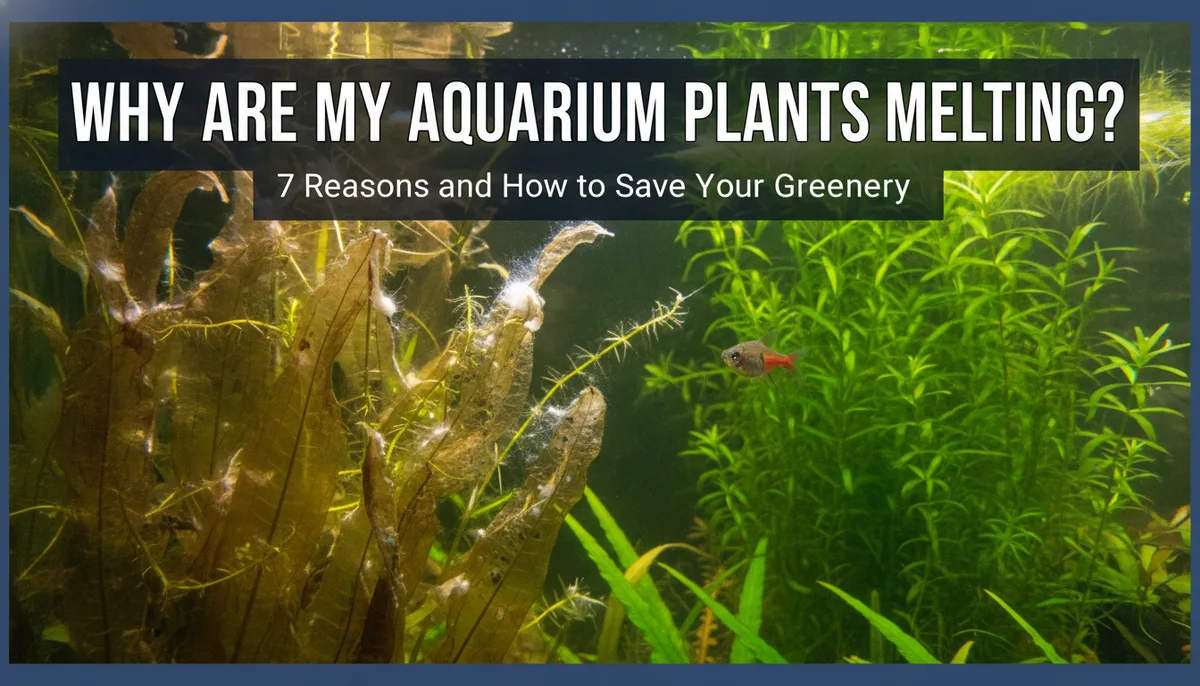
Why Are My Aquarium Plants Melting? 7 Reasons and How to Save Your Greenery
Adding a lush, vibrant plant to your aquarium is one of the most rewarding parts of the hobby. You pick out a beautiful specimen at the store, carefully anchor it into your substrate, and for the first week, it looks like a masterpiece. Then, the "slump" happens. Leaves turn translucent, brown, or simply disintegrate into a mushy mess.
Before you assume you have a "black thumb" for aquatic gardening, understand that this phenomenon, known as "melting," is a natural biological response. It is a sign of transition, not necessarily a sign of death. In this guide, we will explore the seven primary reasons your aquarium plants are melting and provide a roadmap to help them adapt and thrive.
1. The Emersed to Submersed Transition
The most common reason for plant melt occurs the moment you bring a new plant home. Most hobbyists are surprised to learn that many of the plants they buy—such as Amazon Swords, Crypts, and various stem plants—were not actually grown underwater.
Commercial plant farms typically grow aquarium plants emersed, meaning the roots are in water, but the leaves are in the air. This method is preferred by growers because plants grow much faster with access to atmospheric CO2, they ship more durably, and they remain free of aquatic algae.
The Biological Shift
When you submerge an emersed-grown plant, its existing leaves are functionally useless. These leaves were designed to breathe air. Once underwater, the plant must undergo a massive physiological shift to grow submersed leaves that are capable of extracting CO2 and nutrients from the water column.
During this transition, the plant will "jettison" its old leaves to conserve energy. This is why your broad, waxy leaves might melt away, only to be replaced by thinner, more delicate leaves a few weeks later.
What to do:
- Be Patient: Don’t pull the plant out. If the roots are firm, the plant is alive.
- Prune Early: Use sharp aquascaping scissors to snip off leaves as they begin to yellow or become translucent.
- Stainless Steel Aquascaping Scissors Set
2. Fluctuations in Water Parameters
Plants crave stability. While fish can often tolerate slight shifts in pH or hardness, plants are highly sensitive to the chemical makeup of the water. If a plant has been living in a high-alkalinity environment at a local fish store and is suddenly moved to a soft-water home aquarium, it may experience osmotic shock.
This isn't limited to moving plants between tanks. If you drastically change your routine—such as skipping three weeks of water changes and then doing a massive 75% change—the sudden shift in nitrate levels and mineral content can trigger a melt. This is especially true for Cryptocoryne species, leading to the infamous "Crypt Melt."
To minimize this, ensure your tank is stable before adding sensitive species. If you are setting up a high-end display, choosing the right foundation is vital. You can learn more about high-quality setups in our guide to the Best Rimless Aquariums for a Modern Home Aesthetic.
3. Incorrect Planting Techniques
Not every plant belongs in the dirt. One of the most frequent mistakes beginners make is burying plants that shouldn't be buried.
Rhizome Plants
Plants like Java Fern, Anubias, and Bucephalandra possess a thick, horizontal stem called a rhizome. This rhizome must be exposed to the water column. If you bury the rhizome in the substrate, it will rot, causing the entire plant to melt and die within weeks. These plants should be tied or glued to rocks or driftwood.
Bulb and Tuber Plants
Bulb plants, such as the Madagascar Lace or various Lilies, should not be fully submerged in the substrate. Instead, press them about halfway into the sand or gravel. If the bulb is buried too deeply, it can suffocate and rot.
What to do:
- Check if your plant has a rhizome.
- Use Cyanoacrylate Gel Aquarium Glue to attach rhizome plants to hardscape.
- Ensure bulb plants have their "crowns" exposed.
4. Lighting Stress and Transitions
Light is the engine of plant growth, but more isn't always better—and "different" can be dangerous. If you suddenly upgrade your lighting to a high-intensity professional grade LED, your plants may not be able to keep up with the increased metabolic demand.
Conversely, if your light is too weak, the plant will shed its lower leaves (melting them off) as it tries to stretch toward the surface to reach the light. This is common in stem plants that look "leggy" at the bottom.
If you are struggling with finding the right balance of intensity and spectrum, check out our comprehensive breakdown of the Best LED Aquarium Lighting for Planted Tanks: Budget vs. Professional Grade.
5. Nutrient Deficiencies and "Pinholing"
Sometimes what looks like melting is actually the plant consuming itself to survive. When a plant lacks a mobile nutrient (like Potassium or Nitrogen), it will pull those nutrients from its older leaves to support new growth at the top.
This often manifests as small holes appearing in the leaves, which eventually expand until the entire leaf disintegrates. Potassium deficiency is a frequent culprit in planted tanks. For a deep dive into identifying these specific signs, read our Ultimate Guide to Potassium Deficiency.
What to do:
- Root Tabs: For heavy root feeders like Amazon Swords, insert nutrient tabs into the substrate.
- Liquid Fertilizers: Use an all-in-one liquid fertilizer to ensure the water column has adequate micro and macronutrients.
- Seachem Flourish Tabs Multi-Pack
6. Temperature Spikes and Seasonal Changes
Aquarium ecosystems are not immune to the world outside the glass. During the summer, if your room temperature rises, your aquarium water temperature follows. Higher temperatures increase the metabolic rate of plants while simultaneously decreasing the amount of dissolved oxygen in the water.
If the temperature stays too high (above 82°F for many standard plants), the plant may begin to "cook" or melt because it cannot meet its own energy demands. Similarly, if you add a plant that prefers cool water (like certain mosses) into a tropical tank, it may slowly turn brown and dissolve.
7. Mechanical Damage and Biological Interference
Sometimes, the "melt" is actually physical damage. If a plant was crushed during shipping or handled roughly during planting, the damaged tissue will begin to rot. This rot can spread to healthy parts of the leaf.
Additionally, certain "clean-up crew" members might be helping the melt along. While fish like Corydoras are generally safe, some larger species or certain snails might nibble on weakened leaves. If you're looking for safe, effective tank mates that won't destroy your plants, consider the options in our guide to the Best Small Catfish for Community Aquariums.
How to Manage the "Melt" for Long-Term Success
When you see your plants starting to look ragged, don't panic. Follow these steps to ensure they have the best chance of recovery:
- Remove the Decay: Use scissors to remove any leaf that is more than 50% damaged. This prevents the decaying matter from fouling your water and causing an ammonia spike.
- Check the Roots: Gently move a bit of substrate away from the base. If the roots are white and firm, the plant is healthy and just transitioning. If they are black and mushy, the plant is likely gone.
- Maintain Stability: Avoid making any other big changes to the tank (like changing the filter media or drastically altering the light schedule) while the plants are melting.
- Supplement Wisely: If the plant is a root feeder, provide a root tab. If it’s a water column feeder, ensure you are dosing a high-quality liquid fertilizer.
Conclusion
Melting is a frustrating but often inevitable part of the planted aquarium hobby. By understanding that your plants are simply adapting to a new environment—whether that’s a shift from air to water or a change in chemistry—you can provide the stable environment they need to bounce back. Give them time, keep your water clean, and soon those melting stems will be replaced by lush, vibrant submersed growth that is perfectly adapted to your specific aquarium.