
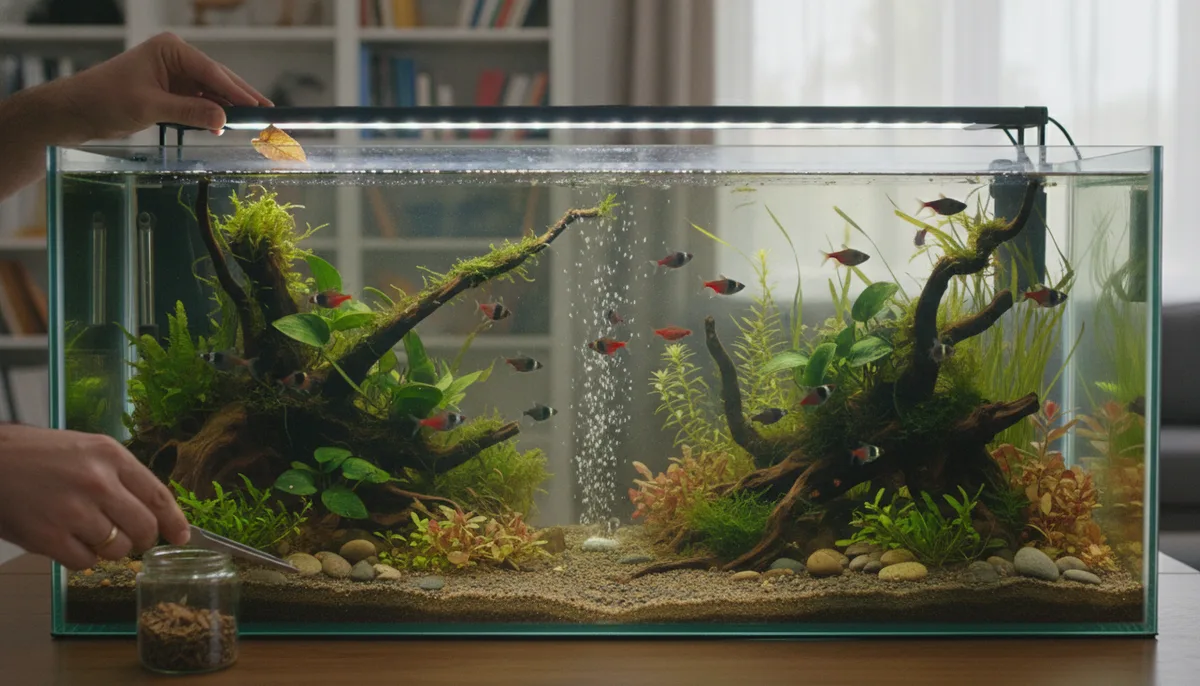
Mastering the Phantom Tetra: A Complete Care Guide for Black and Red Phantoms
In the world of freshwater aquaria, few fish strike the balance between "ethereal beauty" and "hardy reliability" as well as the Phantom Tetras. Belonging to the genus Hyphessobrycon, the Black Phantom (Hyphessobrycon megalopterus) and the Red Phantom (Hyphessobrycon sweglesi) have earned their place as staples in the hobby.
Their name is derived from the translucent quality of their bodies and the dramatic, flowy fins of the males, which trail behind them like silken shadows. For the modern aquarist, these fish offer more than just a pretty face; they provide a window into complex social dynamics and active schooling behavior without the aggression often found in larger characins.
Identification: Distinguishing the "Ghosts" of the Amazon
At first glance, Black and Red Phantom tetras might seem like color variants of the same fish, but they are distinct species with unique origins and physical hallmarks. Understanding these differences is the first step in providing specific care.
The Black Phantom Tetra (Hyphessobrycon megalopterus)
Commonly referred to as the "Shadow Phantom," this species is native to the upper Paraguay and Guaporé River basins in Brazil and Bolivia. They are characterized by a deep, full-bodied profile—much taller than the streamlined neon tetra. Their base color is a sophisticated silvery-gray, but their most striking feature is the large, vertical black oval located just behind the gills.
Males are easily identified by their oversized, charcoal-black dorsal and anal fins. It is important to distinguish them from the Black Skirt Tetra (Gymnocorymbus ternetzi). While they share a color palette, the Black Skirt grows significantly larger (up to 3 inches) and lacks the delicate "phantom" finnage that makes the megalopterus so prized.
The Red Phantom Tetra (Hyphessobrycon sweglesi)
Hailing from the Orinoco River basin in Venezuela and Colombia, the Red Phantom is slightly more compact, reaching about 1.25 inches. Their bodies are a warm, translucent ruby red, with the most intense coloration concentrated in the fins and face.
The Red Phantom is frequently confused with the Serpae Tetra (Hyphessobrycon eques). However, the Serpae is notorious for fin-nipping and has a distinct black edge on its anal fin, which the Red Phantom lacks. Furthermore, Red Phantoms are generally "plant-safe," whereas Serpaes may occasionally nibble on soft-leaved greenery.
Social Behavior: The Art of the "Spar"
One of the most rewarding aspects of keeping Phantom Tetras is observing their social hierarchy. As schooling fish, they require the company of their own kind to feel secure. A group of six is the absolute minimum, but a school of 10 to 12 in a larger tank will reveal their true personality.
Ritualized Combat
If you keep a group with multiple males, you will witness a behavior known as "sparring." Unlike the destructive fighting seen in Cichlids, Phantom tetra sparring is a ritualized dance. Two males will face each other, fully extending their dorsal and anal fins to appear as large as possible. They pivot and twitch, circling one another to establish dominance.
This behavior is rarely harmful; it is a display of vitality intended to impress the females in the school. To encourage this natural behavior, ensure you have a balanced ratio of males to females (roughly 1:2), which prevents any single individual from being overly pestered.
Designing the Ideal "Phantom" Habitat
To see the best colors from your Phantoms, you must replicate the slow-moving, shaded environments of their South American homes. These fish are found in flooded forests and sluggish streams where leaf litter and overhanging vegetation create a "blackwater" or tea-colored environment.
Tank Size and Dimensions
While a 10-gallon tank is technically possible for a small group, it does not allow for the swimming room these active fish crave. A 20-gallon "long" aquarium is the gold standard. The extra horizontal length provides the runway needed for schooling and the territorial displays of the males.
If you are looking for a high-end aesthetic, consider a rimless setup to highlight the clarity of the water and the delicate fins of the fish. You can find more on this in our guide to the Best Rimless Aquariums for a Modern Home Aesthetic.
Aquascaping and Plants
Phantoms look best against a dark background. Use a dark substrate and plenty of driftwood to create shadows. Live plants are highly recommended, as they provide the "hiding spots" mentioned in their natural history.
- Floating Plants: Species like Amazon Frogbit or Salvinia help diffuse light, making the fish feel more secure and encouraging them to swim in the upper and middle water columns.
- Stem Plants: Dense thickets of Rotala or Ludwigia provide a playground for the school.
Keep an eye on your plant health; if you notice small holes appearing in your leaves, it may not be the fish. You might be dealing with a nutrient issue. Check out our resource on Why Your Aquarium Plants Have Pinholes to ensure your aquascape remains as healthy as your fish.
Water Parameters and Maintenance
Phantom Tetras are remarkably hardy once acclimated, but they do best in stable, well-filtered water. Because they originate from river basins with high organic matter, they appreciate clean water with low nitrate levels.
- Temperature: 70–82°F (21–28°C). They are quite adaptable but prefer the middle of this range (around 75-77°F).
- pH: 6.0–7.5. They lean toward slightly acidic water but can thrive in neutral conditions.
- Hardness: Soft to moderate.
To maintain these conditions, a reliable filtration system is key. Because they prefer slow-moving water, a sponge filter or a hang-on-back filter with an adjustable flow is ideal.
Diet and Nutrition for Maximum Color
In the wild, Phantoms are opportunistic omnivores, feeding on tiny crustaceans, insect larvae, and fallen organic matter. In the aquarium, they are not picky, but a monotonous diet will lead to faded colors and a weakened immune system.
To bring out the deep blacks and vibrant reds, provide a varied diet:
- High-Quality Flakes/Pellets: Use these as the daily staple.
- Frozen Foods: Bloodworms, brine shrimp, and daphnia are excellent for providing the protein needed for fin growth and egg production.
- Freeze-Dried Options: These are great for convenience and are often enriched with vitamins.
Selecting Compatible Tank Mates
Phantoms are the quintessential community fish. Their peaceful nature makes them compatible with a wide array of species, provided their tank mates aren't large enough to eat them.
Ideal Companions
- Bottom Dwellers: Corydoras and Otocinclus make perfect neighbors. They occupy different zones of the tank and won't compete with the Phantoms for "sparring" space. For a deep dive into these companions, see our guide on The Best Small Catfish for Community Aquariums.
- Other Tetras: Rummy Nose, Neon, and Ember tetras create a beautiful multi-species schooling effect.
- Dwarf Cichlids: Rams or Apistogramma can share a 20-gallon tank with Phantoms, as the Phantoms remain in the mid-water while the Cichlids stay near the bottom.
Cautionary Pairings
While generally peaceful, Phantoms are active. Avoid keeping them with very slow, long-finned fish like Halfmoon Bettas, as the Phantoms' constant movement might stress the Betta. Additionally, while they won't hunt adult shrimp, they will certainly eat any baby dwarf shrimp they can find.
Breeding the Phantom Tetra
Breeding Black and Red Phantoms is a rewarding challenge for the intermediate hobbyist. They are egg-scatterers and do not provide parental care.
To trigger spawning, you will need a separate breeding tank with very soft, slightly acidic water and plenty of fine-leaved plants (like Java Moss) or a spawning mop. Condition the pair with live or frozen foods for a week before moving them to the breeding tank.
Spawning usually occurs in the early morning. Once the eggs are scattered, the parents must be removed immediately, or they will consume the eggs. The fry are exceptionally small and will require "infusoria" or liquid fry food until they are large enough to take newly hatched brine shrimp.
Final Thoughts: The Enduring Appeal of the Phantom
Whether you choose the sophisticated, monochromatic look of the Black Phantom or the fiery brilliance of the Red Phantom, these fish bring life and movement to any aquarium. By providing them with a well-planted environment, stable water parameters, and a school of their own kind, you ensure that these "ghosts" of the Amazon will haunt your tank in the best way possible for years to come.
If you happen to find a rare "Holy Grail" specimen at a distant fish store or auction, don't let the distance stop you. Learn how to safely transport your new additions with our guide on How to Fly with Live Fish.